

Thank you for Subscribing to Food Business Review Weekly Brief
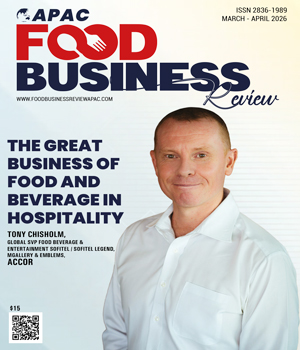
Tony Chisholm, Vice President Food & Beverage I MEAT & Asia, Premium, Midscale & Economy Hotels, has built a distinguished career in hospitality, spanning hotel operations, revenue management and food and beverage leadership. Chisholm began his journey in New Zealand at the age of 18 and joined Accor in 2003 at Sofitel Saigon Hotel in Vietnam, quickly rising through leadership roles. By 2015, he was General Manager and Regional Country Manager for Vietnam before transitioning to private equity, where he spent eight years managing mergers, acquisitions and asset portfolios. Returning to Accor as Vice President of Food and Beverage for the Middle East, Africa, Turkey and Asia, he now drives operational excellence and financial performance. Now, with a strategic vision for the future and deep industry expertise in elevating guest experiences, Chisholm continues to shape the evolution of food and beverage offerings across Accor’s dynamic portfolio. Recognizing Tony Chisholm’s strategic leadership and industry expertise, this exclusive interview explores his invaluable insights on transforming food and beverage operations into dynamic business drivers, enhancing guest experiences and delivering sustained value for Accor’s diverse portfolio. Culinary Concepts: The New Hotel Differentiator I see food and beverage as the soul of a hotel—an essential factor in shaping a guest’s decision on where to stay and driving value for owners. Post-COVID, global interest has surged, with guests more knowledgeable and discerning than ever. This shift has made hotel owners more open to dynamic brand concepts, including partnerships with established restaurant brands. In some locations, integrating a well-regarded restaurant with an existing customer base enhances both the hotel experience and the brand’s reach. These collaborations—through lease agreements or revenue-sharing models—create vibrant dining experiences that were rare in hotels a decade ago.
Alternative Proteins/Plant based food
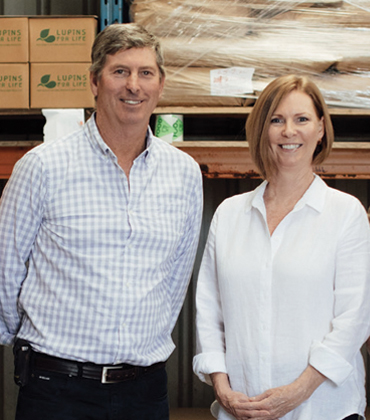
What challenges do manufacturers face with conventional plant proteins? Lupins for Life supplies protein and fibre-rich ingredients for food and beverage manufacturers who need predictable formulation performance without isolate-style processing. Many plant protein options increase protein content through more intensive processing, while fibre, functional performance, and batch consistency become harder to maintain at scale. Founded in 2016 by fifth-generation farmers Gary and Heather Drew, Lupins for Life focuses on clean-label, plant-based ingredients for food and beverage applications. The company has focused on unlocking the full potential of lupins to create ingredients that support better nutrition outcomes, aligned with evolving plant-based dietary expectations. Australian sweet white lupins are positioned as a high-density nutritional ingredient for manufacturers. They contain 43 percent protein and 29 percent dietary fibre. These nutrition levels support higher protein and fibre density than those of standard reference crops such as quinoa and oats, alongside antioxidant levels that compare strongly with those of many berries. “Because we control sourcing and processing, scaling doesn’t mean compromising,” says Chris Johnston, director and business operations manager. .
Food Processing
Whether crafting the perfect sushi with state-of-the-art robots or automating entire kitchen workflows, Suzumo is trailblazing the modernization of the food service industry through cutting-edge automation and AI-driven solutions. As food businesses seek greater efficiency, consistency and innovation, Suzumo is at the forefront—optimizing operations, reducing labor costs and ensuring high-quality food production at scale. With the acquisition of Japan System Project (JSP) in 2021, its focus shifted from solely manufacturing kitchen equipment to delivering complete restaurant automation solutions. By integrating AI and IoT, Suzumo provides comprehensive systems that enhance efficiency, reduce costs and ensure food safety at every stage of production and service. A Legacy of Innovation and Global Expansion Founded in 1961, Suzumo has grown into a global leader in food automation. It has a factory in Saitama Prefecture, Japan and operates through a consolidated business structure that includes JSP, which specializes in automation solutions for restaurant operations and SEH Japan Co., Ltd., which focuses on hygiene-related products. Suzumo International Corporation in the USA and Suzumo Singapore Corporation oversee global sales and distribution, while Bluefin Trading LLC in Dubai extends operations to the Middle East. “With our machines tailored to produce globally popular variations like the California roll and Dragon roll, we make Japanese cuisine more accessible and customizable worldwide,” Suzumo said. The company’s philosophy, “Delivering Deliciousness and Warmth to the world,” emphasizes its commitment to integrating advanced technology while respecting regional food cultures. AI-Driven Automation Reshaping Food Service Suzumo automation technology goes beyond food preparation, encompassing entire restaurant and supermarket operations. It has seamlessly incorporated AI-driven systems into multiple aspects of the dining experience. The auto reception seating arrangement system, “ARESEA,” optimizes seating arrangements and reduces wait times, enhancing customer experience. Automated self-ordering system “SEMOOR” boosts efficiency, minimizing human error and reducing staff workload. Currently, Suzumo is working on upgrading many of its AI systems to improve user convenience. For example, AI-powered monitoring systems track store activity, providing real-time insights into customer movement, optimizing stock levels and dynamically adjusting pricing based on demand patterns. In supermarkets, AI cameras constantly assess stock levels, preventing food waste by aligning production with real-time demand. These systems analyze peak shopping hours, seasonal trends and customer purchasing behavior, allowing for precise inventory adjustments. Suzumo’s demand forecasting AI factors in variables like weather conditions and regional buying trends to ensure that food is always stocked at optimal levels. The integration of AI-driven dish-up systems in restaurants ensures that food is plated accurately, maintaining consistency in portion sizes, quality and presentation. This technology also monitors food temperatures, guaranteeing that meals are served at ideal conditions while adhering to strict hygiene standards. Suzumo has changed back-end kitchen operations with its product management AI, which guides chefs and kitchen staff through efficient order fulfillment methods. By analyzing incoming orders and work patterns, the system helps manage kitchen workflow, reducing preparation time and ensuring quick service without sacrificing quality. In an industry where efficiency and consistency are paramount, these AI-driven solutions significantly reduce labor costs while enhancing productivity. Training new employees, which traditionally requires significant time and resources, has also been optimized through AI. Workers can acquire the necessary skills faster and with minimal supervision.
Most packaging companies operate like a relay race. One vendor extrudes the film, another handles printing, a third manages lamination and someone else assembles the final product. Each handoff risks delay and inconsistency, with costs stacking up. Kinderway Packaging (KDW) was built to change that. Rather than outsourcing each stage, KDW brings the entire process in-house—from film extrusion and printing to lamination and pouch conversion. This integrated model provides more than operational control; it rethinks how flexible packaging should work. Packaging becomes structurally sound and shelf-ready and moves from concept to production without unnecessary friction. “Speed and flexibility are essential in fast-moving consumer goods (FMCG) like packaged food, personal care and household products. And when we have the end-to-end control, our R&D team is empowered to experiment, adapt and scale without the delays tied to third-party dependencies,” says Jacky Li, head of the overseas business unit at KDW. Scaling new ideas happens almost in real time—whether it’s recyclable films, high-barrier materials or advanced formats designed for product protection and shelf stability. At the same time, sustainability runs through every layer of the process. Solar-powered manufacturing, solvent recovery systems and responsible sourcing are built into daily operations and are not tacked on as afterthoughts. Independent certifications strengthen KDW’s foundation. Standards such as ISO, HACCP, FSSC, BRC and SMETA validate the practices, ensuring consistency, transparency and repeatability across global markets. Combined, these capabilities help brands accelerate time to market with packaging that performs in transit, commands attention on shelves and aligns with long-term sustainability goals. Teams in China, Australia and Mexico add regional agility to this global consistency—turning packaging into a strategic advantage instead of an operational burden.

Alternative Proteins and Plant Based Food

Technological Advances in Alternative Proteins
Jenna Kouri, Technical Business Development Manager, Nutrition, Batory Foods Inc
Food Processing

Driving Growth Through Innovative Strategies
Tom Marzella, Commercial Director - Oceania, Glanbia Nutritionals
Food Processing

From Insight to Impact: Committed to Quality Across Continents
Chengboey Lau, Senior Director - Quality Food Safety, AMEA, Kellanova
Organic Brands

Proactive Allergen Management for a Safer, Global Supply Chain
Inggrid Aryal, Oceania Food Safety Manager, Nestlé Oceania
Confectionery

Prioritizing Energy Regulation for a Sustainable Future
Ashley Hoover, Director of Sustainability; Kathy Lenkov, Corporate Communications Lead, and Drew Harper, Manager, Corporate Social Responsibility & Sustainability, Aspire Bakeries

IN MY OPINION
Food Distributor and Supplier
The Shift to Autonomous Maintenance in Manufacturing
Fauzi Baharin, Manufacturing Manager, Mondelez International

LAST WORD
Food Processing
Organic Food Production in Vietnam: Nurturing Sustainable Growth
Alberto Regini, Director of Operations, Dobla
IN FOCUS

Expanding Applications of Protein and Fiber in APAC
Protein and fiber products drive functional nutrition, innovation, sustainability, and market growth across food, beverage, and wellness sectors.

Harnessing Protein and Fiber-Rich Foods: Nutritional Trends in the APAC Region
Protein and fiber-rich foods contribute significantly to muscle development, lower the likelihood of chronic diseases, and help regulate blood sugar levels.
EDITORIAL
Precision Nutrition and Process Discipline
Across APAC’s evolving food landscape, Food Business Review APAC examines how formulation integrity, regulatory discipline and supply chain control are defining competitive advantage. As manufacturers respond to rising allergen scrutiny, plant-based demand and post-pandemic cost pressures, consistent ingredient performance and preventive food safety systems are becoming central to sustainable growth.
At the center of this edition is Lupins For Life, recognized as Top Protein and Fibre Products Producer in APAC 2026. Built on a vertically integrated paddock-to-ingredient model, the company delivers protein and fibre-rich lupin ingredients with predictable batch consistency and full traceability. Australian sweet white lupins provide 43 percent protein and 29 percent dietary fibre, enabling high-density nutritional formulation without isolate-style processing. Its nine-step precision milling system allows tailored specifications while maintaining clean-label integrity. Research conducted across aged care facilities showed a 29 percent improvement in long-term resident nutritional status and a 34 percent reduction in malnutrition rates. By aligning regenerative sourcing with controlled processing, Lupins For Life demonstrates how plant-based ingredients can meet both performance and sustainability expectations at scale.
From commercial portfolio discipline to allergen risk management, leadership insight clarifies what sustainable execution requires. Tom Marzella, Commercial Director - Oceania at Glanbia Nutritionals, highlights disciplined portfolio strategy and customer-aligned growth amid supply volatility and cost pressures. Inggrid Aryal, Oceania Food Safety Manager at Nestlé, underscores proactive allergen management through supplier-level controls, role-specific workforce training and digital HACCP transformation to strengthen end-to-end risk visibility.
Organizations that embed sourcing control, formulation integrity and regulatory precision into daily operations are defining the next phase of industry performance. We invite readers to examine how disciplined processing, proactive risk management and customer-aligned strategy are raising measurable standards across APAC’s food manufacturing sector.
