

Thank you for Subscribing to Food Business Review Weekly Brief

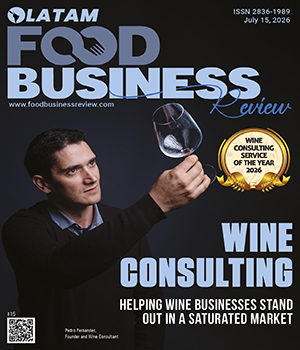
One of the biggest problems in the wine industry is not poor wine, but indistinguishable wine. Across restaurants, wine shops, and producer portfolios, shelves are increasingly crowded with labels that follow the same trends, target the same distributors, and compete using the same commercial language. The result is often a fragmented portfolio, weaker customer loyalty, and wines that struggle to establish a lasting market identity. Portugal-based Wine Consulting was founded on the belief that successful wine businesses are not built by offering more wines, but by making clearer, more disciplined decisions about who the wine is truly for and why it deserves to exist in the market at all. Led by Portuguese winemaker and consultant Pedro Fernandes, the consultancy combines technical enology expertise, commercial strategy, portfolio architecture, and digital positioning into an integrated approach that helps producers, restaurants, and wine businesses reduce noise, sharpen identity, and build wines with stronger long-term relevance. A Different Way to Think About Wine Pedro Fernandes entered the wine world through his early experiences in the vineyards alongside his parents, where he was exposed to the realities of viticulture, agricultural work, and the rhythm behind wine production. That early connection eventually led him to study at the University of Trás-os-Montes and Alto Douro in Portugal, followed by work in highly demanding technical environments, including Château Latour in Bordeaux.
Food Service Equipment
In the restaurant business, a well-functioning kitchen is the backbone of success. When equipment breaks down, every minute counts. That’s where Elite Kitchen Services (EKS) steps up. Founded by Adam Roberts, EKS is built on a simple but powerful idea: to provide restaurant owners with a one-stop solution for kitchen equipment repairs, maintenance, and installations. Instead of dealing with multiple vendors for different issues, restaurant owners can rely on EKS to handle everything—from hot-side cooking equipment to refrigeration, HVAC, exhaust systems, and even minor plumbing and electrical work. “I wanted to create a company where restaurant owners didn’t have to call five different service providers to fix their kitchen,” Roberts explains. “With EKS, they make one call, and we take care of everything.” A Full-Service Approach to Kitchen Maintenance EKS isn’t just about repairs—it’s about keeping restaurants running smoothly and efficiently. The company offers preventive maintenance to help businesses avoid costly breakdowns and unexpected downtime. If an issue does arise, EKS technicians are trained to diagnose and repair both hot-side and cold-side equipment, ensuring clients don’t have to wait for a specialist to be available. Roberts has always believed that having highly trained technicians is key to providing top-tier service. “I don’t want a team where one guy only knows refrigeration and another only knows ovens,” he says. “I want every technician to be able to work on everything.” While some specialization is inevitable, EKS ensures that its team is cross-trained so they can handle a wide range of equipment and minimize delays for customers. Beyond repairs and maintenance, EKS also sources and installs commercial kitchen equipment. The company has the capability to order appliances, inspect them at its warehouse, and deliver them directly to clients. This hands-on approach gives restaurant owners peace of mind, knowing their equipment is installed properly and ready to perform.

Supplement Manufacturing

Few ingredients have gone from agricultural waste to global health staple quite like whey. Once discarded, it now powers the billion-dollar fitness and nutrition industry. Behind this transformation are innovators who didn’t just see a byproduct—they saw potential. One of them is Sooro Renner, a company reshaping the functional dairy landscape through innovation, scale, and service. “Our growth has always been guided by precision, trust, and deep technical partnerships— starting from Brazil and now reaching the world,” says Claudio Hausen de Souza, Vice President of Commercial and Marketing. Today, Sooro Renner is the largest whey processor in Latin America by volume, with more than two decades of experience. It supplies high-quality ingredients for both human and animal nutrition and holds full export licensing to serve clients worldwide across a wide array of food and beverage sectors. Its product portfolio is designed for both performance and versatility. The company’s Whey Protein Isolate 90 percent delivers ultra-high protein content with less than one percent milk fat—ideal for use in nutritional supplements and high-protein dairy products. For broader application needs, its Whey Protein Concentrate 80 percent is available in regular, instant, and lactose-free forms, making it suitable for everything from protein shakes to ice creams and baked goods. The company also offers WPC 60 percent and WPC 34 percent, which provide excellent texture, solubility, and performance in dairy beverages, energy drinks, and processed foods. Sooro Renner’s whey powder—a blend of lactose, protein, and reduced mineral salts—adds rich dairy flavor and enhances the consistency of chocolates, processed meats, and more. In addition, it produces permeate, which is used in both food and feed formulations, ensuring every element of whey is optimized.
Bakery
It begins with a scent—earthy, warm and timeless. The kind that drifts from old European bakeries, where handcrafted breads are baked fresh each morning. The crunch of a rustic crust, the tender pull of a warm center and the comfort of something handmade and honest. For many, it’s a taste of childhood. For Breadsmith, it’s a tradition brought to life each morning. Rooted in the time-honored traditions of old-world master bakers, the company has built a proud legacy of authenticity, crafting handcrafted, European-style artisan breads. At Breadsmith, each day begins on a clean slate. Every bread, cookie or scone is made from scratch, using only the highest-quality ingredients with no additives or preservatives. But freshness is just the beginning. Breadsmith’s true hallmark lies in the mindful care that flows from the ovens into the heart of every community it serves. “Our stores are locally owned, operated and rooted in the community. Whether it’s supporting school fundraisers or donating fresh, unsold bread to local shelters, we believe in giving back every single day,” says Tim Malouf, president. Where Every Loaf Tells a Story Breadsmith offers more than 300 unique product recipes, including pie bread filled with house-made fruit fillings, cookies that range from classic chocolate chip to indulgent blueberry cheesecake cookie and even coffee cakes. Beyond flour, water, yeast and salt, every baked good is enriched with the taste of nostalgia and familiar moments. It’s the kind of bread that wouldn’t feel out of place on a grandmother’s kitchen counter: simple, honest and made to be shared. That is why longtime customers who grew up with Breadsmith return as adults with stories that span years.

Beer and wine

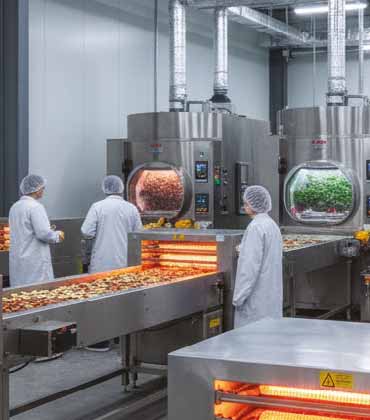
When F&B manufacturers bring products to market, they need certainty. Certainty that an açaí powder will keep its delicate vitamins, that a dehydrated strawberry will deliver the taste and crunch of fresh fruit and that a soup mix developed in Brazil will clear U.S. regulatory standards. For over six decades, Liotécnica, a specialist in food ingredient innovation and drying technologies with a strong emphasis on natural, high-quality solutions, has delivered that certainty Founded in 1964, the company offers the full spectrum of dehydration with Brazil’s largest freeze-drying capacity alongside vacuum, hot-air and spray drying. This breadth allows brands to balance performance and cost because each drying method affects products differently. Freeze-drying best preserves delicate nutrients and textures but costs more. At the same time, hot-air or vacuum-dried formats work well for applications with tight margins and spray-dried powders excel for instant beverages and flavorings. Whatever the method, the goal is to extend shelf life beyond 12 months while preserving nutrition, flavor and texture. “Drying is not just about removing water. It is about protecting what makes each ingredient valuable,” says Federico Alfredo Kladt Kladt, director of R&D, innovation and regulatory affairs. Beyond dehydration, Liotécnica leveraged its moisture control and ingredient processing expertise to become one of South America's few malt extract producers. It operates a dedicated facility that supplies high-quality extracts to enhance bakery and chocolate products, adding texture in crackers and masking offnotes in cocoa. A third factory produces instant jellies, beverages, soups and nutrition programs, with global leaders like Herbalife relying on Liotécnica to supply entire product lines. These pillars, dehydration, malt extract and dry mixes, position Liotécnica as a partner in multiple categories. What sets Liotécnica apart is its flexible contract manufacturing model. Some clients arrive with an idea, relying on the R&D team to develop formulas, source raw materials and packaging, and manage production and regulatory approvals. When clients are uncertain about technical choices, it advises which drying method works best for their product. Others bring established recipes and count on it for confidential, consistent manufacturing. For proprietary formulations, Liotécnica signs NDAs, treating client recipes with the same security as their own IP. A U.S. client once envisioned a soup that could retail for just one dollar, an ambitious target requiring careful ingredient selection and process optimization. Liotécnica handled the entire process from developing the formulation, producing samples, refining the recipe through several rounds of feedback, designing English- language packaging in Brazil, and navigating regulatory approvals for entry into the U.S. market. Today, that soup sits on American shelves.
Coffee And Tea

Building Foundational Elements for Sustainable Food Safety Management System
Wumi Yusuff, Director, Food Safety at Ferrara
Wine Distributors

Incorporating Greener Network Designs Into Our Wine & Spirits Business
David Dutt, Head of Network, Pernod Ricard
Confectionery
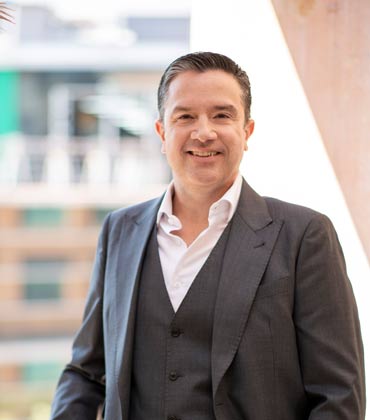
Driving Procurement Excellence in the Food Industry
Javier Carnevali, Chief Procurement Officer, Grupo Herdez [BMV: HERDEZ]
Food Sustainability

Building the Future of EHSS Leadership: Safety, Sustainability and Culture
Steve Curry, Sr. EHSS Manager, City Brewing Company
Business Services

Staying Invigorated...
Mary Thompson, Director of Food and Beverage Outlets, Shutters on the Beach
IN MY OPINION
Food Processing and Packaging
A Collective Action Toward Circular Economy
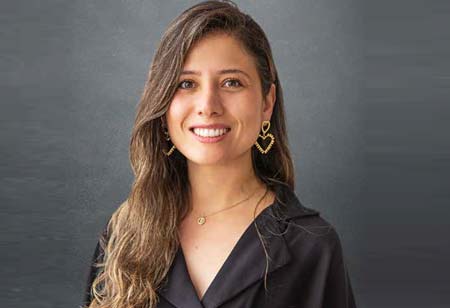
Maria Camila Lopez Rojas, Chief Sustainability Officer, Juan Valdez Café
IN FOCUS

EDITORIAL
Elevating Wine Strategy Through Precision Consulting
Latin America’s food and beverage industry continues to evolve as businesses navigate changing consumer preferences, growing competition and the need for stronger market differentiation. Success increasingly depends on clear positioning, operational discipline and the ability to deliver value that resonates with customers. In this edition of Food Business Review Latin America, we feature organizations and leaders helping shape that evolution.
At the center of this issue, Wine Consulting is recognized as the Wine Consulting Service of the Year 2026. Based in Portugal, the company works in an industry where standing out has become increasingly difficult as the market grows more crowded. It brings together enological expertise, portfolio strategy and consumer insight to help producers, restaurants, hotels and retailers build clearer identity and stronger wine programs. Its focus on thoughtful selection and strategic alignment ensures each wine plays a clear role within the wider portfolio and supports a more intentional approach to the business.
Sustainability continues to gain importance across the sector. Maria Camila Lopez Rojas, Director of Sustainability at Juan Valdez Café, discusses how circular economy practices are helping reduce waste, improve packaging approaches and strengthen long-term environmental responsibility across the industry.
Meanwhile, Steve Gaber, Director of Manufacturing at Volpi Foods, highlights the importance of balancing craftsmanship with operational scale in modern food production. He highlights workforce stability, supply chain adaptability and focused execution as key factors in maintaining quality while supporting growth.
Together, the organizations and leaders featured in this issue reflect how strategic thinking, responsible operations and adaptability are shaping the future of the food and beverage industry. We invite readers to explore the insights presented throughout this edition.
