
Thank you for Subscribing to Food Business Review Weekly Brief

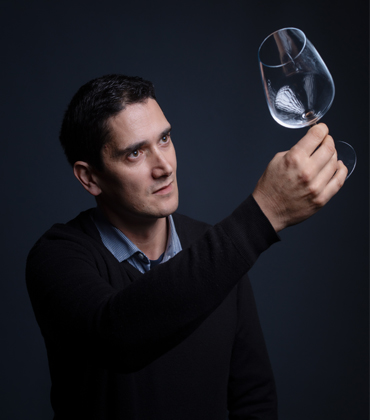 Pedro Fernandes, Founder and Wine Consultant
 One of the biggest problems in the wine industry is not poor wine, but indistinguishable wine.
Across restaurants, wine shops, and producer portfolios, shelves are increasingly crowded with labels that follow the same trends, target the same distributors, and compete using the same commercial language. The result is often a fragmented portfolio, weaker customer loyalty, and wines that struggle to establish a lasting market identity.
Portugal-based Wine Consulting was founded on the belief that successful wine businesses are not built by offering more wines, but by making clearer, more disciplined decisions about who the wine is truly for and why it deserves to exist in the market at all.
Led by Portuguese winemaker and consultant Pedro Fernandes, the consultancy combines technical enology expertise, commercial strategy, portfolio architecture, and digital positioning into an integrated approach that helps producers, restaurants, and wine businesses reduce noise, sharpen identity, and build wines with stronger long-term relevance.
A Different Way to Think About Wine
Pedro Fernandes entered the wine world through his early experiences in the vineyards alongside his parents, where he was exposed to the realities of viticulture, agricultural work, and the rhythm behind wine production. That early connection eventually led him to study at the University of Trás-os-Montes and Alto Douro in Portugal, followed by work in highly demanding technical environments, including Château Latour in Bordeaux.
That experience shaped the foundation of Wine Consulting.
At Château Latour, Fernandes saw firsthand how some of the world’s most respected wine producers operated with clarity and precision. The focus was never on overwhelming the market with endless references. Success came from discipline, consistency, identity, and an uncompromising understanding of what each wine represented.
That philosophy now drives the company’s consulting approach.
Wine Consulting works with wineries, restaurants, hotels, and wine shops that want stronger positioning and clearer market direction. The company helps clients answer questions that many businesses struggle to define clearly. Who is the wine really for? What role should it play in the portfolio? Does the product genuinely fit the market it is entering? Does the business have too many labels competing with each other?
For Fernandes, many wine businesses lose focus because they build portfolios around assumptions instead of actual consumer behavior. Producers often blindly follow distributor advice, resulting in shelves filled with wines that look and taste increasingly similar. Wine Consulting challenges that pattern by focusing on the end consumer first.
“A producer should understand the final drinker with precision before making decisions in the vineyard, cellar, or portfolio,” says Fernandes.
That philosophy often brings the consultancy into projects far earlier than traditional advisors. Fernandes frequently works with producers before harvest begins, helping align vineyard management, cellar decisions, wine style, and commercial objectives from the start. The goal is to reduce the gap between what a producer intends to create and what the market ultimately understands and values.
Precision Over Excess
One of the strongest differentiators behind Wine Consulting is its disciplined approach to portfolio building.
A producer should understand the final drinker with precision before making decisions in the vineyard, cellar, or portfolio.
Many wineries believe growth comes from adding more products. Fernandes believes the opposite often creates confusion. Excessive diversification weakens identity, fragments communication, and creates unnecessary commercial pressure. Instead, the consultancy pushes clients toward focused portfolios where every wine serves a clear purpose.
That philosophy became especially visible during one of the company’s engagements in Portugal. A wine shop operating with nearly 800 products approached the consultancy for guidance. Some labels existed as single bottles with little commercial rotation. The portfolio lacked cohesion, and inventory management had become inefficient.
Wine Consulting restructured the business around a stronger commercial logic. Slow-moving inventory was reduced through e-commerce initiatives. The company introduced products with stronger margins and better rotation potential, discovered through wine fairs and market analysis. Creative tasting experiences were developed to attract repeat audiences, including unconventional seasonal events during periods when wine shops traditionally avoid hosting tastings.
The consultancy also improved the client’s gift hamper strategy, product selection process, and by-the-glass tasting notes. The result was a more coherent commercial identity and a stronger customer experience built around clarity instead of excess. This mindset appears throughout the company’s process.
Wine selection begins with defining the customer profile, price range, and commercial objectives. Fernandes and his team then conduct blind tastings where wines are evaluated using structured technical criteria, including aromatic precision, balance, freshness, tannin quality, finish, oak integration, and stability.
 But technical quality alone is never enough. The company also evaluates label design, storytelling potential, commercial positioning, and long-term portfolio fit. Wines are scored systematically through internal databases, allowing decisions to be driven by consistency instead of intuition alone.
Yet Fernandes is careful not to reduce wine selection to spreadsheets alone. He believes the strongest decisions come from balancing technical expertise, commercial evidence, and long-term strategic fit.
There are moments when market data points toward commercially attractive products that may weaken a producer’s long-term identity. Other wines may show exceptional technical quality but limited market relevance. Wine Consulting approaches these situations by combining structured evaluation with experienced judgment, helping clients avoid short-term decisions that compromise long-term positioning.
Interestingly, Wine Consulting often favors smaller producers and less commercially saturated labels.
“I believe that wines with stronger identity, typicity, and authentic stories create deeper connections with consumers and face less direct price comparison in the market,” says Fernandes.
For emerging and lesser-known producers, this approach can become a powerful commercial advantage. Rather than chasing visibility through aggressive volume or trend-driven branding, Wine Consulting focuses on helping producers build credibility through positioning, storytelling, digital communication, and consistency between the wine and the identity behind it. Fernandes sees digital marketing as one of the most effective tools available today for transforming smaller wine projects into recognizable brands with long-term market relevance.
Wine Is Emotional Before It Is Technical
While many consultants focus heavily on technical tasting metrics, Wine Consulting approaches wine as something much larger than the bottle itself.
Fernandes believes wine is fundamentally tied to emotion, memory, and human connection. Consumers may forget technical details about a wine, but they remember the restaurant where they shared it, the atmosphere surrounding the tasting, and the story attached to the producer. That understanding shapes how Wine Consulting builds positioning strategies for clients.
-
I believe that wines with stronger identity, typicity, and authentic stories create deeper connections with consumers and face less direct price comparison in the market.
For restaurants, the company studies cuisine style, average spend per meal, customer expectations, and pairing opportunities before constructing wine lists. Training is often provided to staff so they understand storage, pairings, and how to communicate wines more effectively to guests.
For wine shops and hotels, the consultancy develops personalized tasting concepts designed to keep audiences engaged over time. Fernandes believes repetition kills excitement, especially among returning tasting audiences. Creativity becomes a commercial tool. This focus on communication extends far beyond physical tastings.
Wine Consulting strongly integrates digital marketing into its consulting model. Fernandes argues that modern wine businesses can no longer rely solely on traditional industry structures or in-person experiences to build visibility. Social media presence, e-commerce strategy, website development, branding, launch communication, and educational content now play a critical role in shaping consumer trust and commercial traction. This becomes even more important when working with younger consumers.
The company closely tracks changing consumption behavior among millennials and newer generations who approach wine differently from previous audiences. These consumers tend to value authenticity, accessibility, transparency, and lifestyle alignment over prestige-driven wine culture.
They are more open to fresher wine styles, lower alcohol content, softer tannins, and less formal consumption experiences. They discover wines digitally and expect brands to communicate clearly and consistently online. Wine Consulting helps clients adapt to these shifts without losing their identity.
Building Systems Instead of Short-Term Fixes
Perhaps the most valuable aspect of Wine Consulting’s approach is that the company does not position itself as a provider of isolated recommendations. Fernandes focuses on helping clients build systems that improve decision-making long after the consulting engagement ends.
Clients are guided through structured frameworks that clarify how wines should be evaluated, how portfolios should evolve, and how business decisions can remain consistent over time. This includes challenging clients directly when necessary.
Fernandes believes consulting loses value when advisors simply confirm existing assumptions. Strategic honesty is part of the company’s philosophy.
“We often encourage producers to rethink emotional attachments to underperforming wines, reassess fragmented portfolios, and separate tradition that adds value from habits that weaken commercial clarity,” says Fernandes.
The company’s integrated perspective is especially rare within the wine industry, where production, branding, communication, and commercial strategy are often treated separately.
Wine Consulting brings these elements together into one connected framework where vineyard decisions, cellar practices, storytelling, portfolio structure, consumer psychology, and market positioning all influence one another. That broader vision is ultimately what sets the company apart.
In an industry crowded with similar labels, fragmented portfolios, and increasingly distracted consumers, clarity has become a competitive advantage.
Wine Consulting was built around that idea. Through disciplined selection, technical precision, strategic positioning, and a deep understanding of evolving consumer behaviour, the company helps wine businesses create portfolios with stronger identity, stronger relevance, and stronger commercial direction.
For producers, restaurants, hotels, and wine retailers trying to stand out in a saturated market, that clarity may ultimately become more valuable than the wine itself.
Disciplined Wine Advisory for Modern Hospitality and Retail
Wine selection decisions shape the commercial identity of restaurants, hotels, wine shops, and import portfolios. Buyers responsible for curating wine programs face a complex landscape in which supply expands rapidly while consumer preferences evolve across regions, price tiers, and dining contexts. A poorly structured portfolio can quickly translate into stagnant inventory, inconsistent positioning, and missed opportunities to connect with guests who increasingly view wine as part of an experience rather than a standalone purchase. Sound wine consulting therefore centers on disciplined judgment that balances taste evaluation, market fit, and commercial viability.
Effective advisory work begins by clarifying who the wine is intended for and what role it must play in the business. Hospitality programs require selections that complement cuisine, price expectations, and service style. Retail environments demand portfolios that rotate efficiently while offering differentiation from widely distributed labels. Importers often prioritize margin and positioning across multiple markets. Clear definition of consumer profile and commercial objectives prevents the common mistake of assembling broad collections that lack coherence and fail to resonate with buyers at the table or shelf.
Rigorous tasting methodology also separates thoughtful consulting from informal recommendation. Blind evaluation remains essential because it reduces bias and allows wine to be judged on clarity, balance, typicity, structure, and overall harmony rather than reputation. Careful comparison across similar wines, often grouped by style or region, allows advisors to identify the small number that demonstrate both sensory quality and practical market potential. Portfolio discipline emerges when advisors resist the temptation to approve too many wines and instead focus on those capable of sustaining consistent demand.
Commercial context must remain part of the evaluation. Label identity, producer credibility, story, and price structure influence whether a wine can be successfully positioned in a restaurant list or retail environment. Wine buyers frequently struggle when lists grow without a clear narrative or when inventory includes numerous labels with overlapping profiles. Structured selection frameworks allow businesses to build portfolios that are easier to manage and easier for staff to explain to guests. Training and communication become crucial at this stage. Staff who understand pairing principles, storage practices, and the background of each wine are better equipped to guide diners and retail customers toward confident purchasing decisions.
Storytelling also plays a meaningful role in wine commerce. Consumers often remember the experience surrounding a bottle as much as the liquid itself. Tastings, themed events, and interactions with producers help connect buyers with the people and places behind the wine. Hospitality operators benefit when wine programs reinforce the overall atmosphere of a venue rather than functioning as a disconnected product list. Consistency across tasting programs, portfolio structure, and communication materials allows wine to reinforce brand identity and customer loyalty.
“Wine Consulting’s approach begins with a diagnostic review that clarifies target consumer, price positioning, and the strategic role each wine should play within a portfolio.”
Expansion into new markets or product categories introduces another layer of complexity. Growth requires consistent evaluation benchmarks so that quality standards remain stable even as the number of wines under consideration increases. Organized tasting records, structured databases, and clear technical parameters help advisors maintain decisiveness while assessing larger pools of producers. Disciplined filtering protects portfolios from dilution and ensures that each addition supports the broader business strategy.
Wine consultancy demonstrates how structured advisory can guide these decisions. Its approach begins with a diagnostic review that clarifies target consumer, price positioning, and the strategic role each wine should play within a portfolio. Blind tastings assess sensory attributes and stability while commercial elements such as label identity, producer narrative, and margin potential are examined before final recommendations are made. Deliverables typically include diagnostic reports, curated wine lists or portfolios, technical reference sheets, and practical implementation guidance. Its consulting also extends beyond selection to staff training, tasting program design, and digital communication that supports market visibility. Organizations that require disciplined wine advisory and a structured approach to portfolio development will find Wine Consultancy a compelling partner for sustained market positioning.
...Read more
Wine Consulting Services Info
Q1
What Should Producers Expect From Wine Consulting Services in Latin America?
Wine producers should expect guidance that connects the vineyard, cellar and market instead of treating them as separate worlds. Wine Consulting Services in Latin America can support everything from grape growing and winemaking decisions to branding, sales strategy and route to market planning. The real value is not just improving the wine itself but creating a clear path from vineyard conditions to a product that buyers understand, value and can confidently place in the market. For many estates, this clarity helps avoid expensive corrections later in the process.
Q2
How Does Wine Consulting Bring Oenology Into Business Planning?
Good wine consulting starts in the vineyard and cellar, but it does not stop there. It blends oenology expertise with business thinking so production decisions support commercial outcomes. Wine Consulting Services in Latin America often combine viticulture, winemaking, branding, digital presence and sales strategy. This makes it easier for producers to align technical choices with how the wine will be positioned, priced and sold, instead of leaving those decisions disconnected from the reality of the product.
Q3
How Do Wine Consulting Services in Latin America Connect Vineyard Decisions to Market Fit?
Choices like grape variety, vineyard site and cultivation approach directly shape both wine style and commercial potential. Strong consultants help producers understand how those decisions will be received in the market, not just how they perform in the vineyard. Wine Consulting Services in Latin America are especially valuable here because a poorly aligned vineyard choice can limit a wine’s identity long before it reaches the bottle. The best outcomes happen when soil, climate and grape selection also support a clear and believable market story.
Q4
Why Do Branding and Sales Matter in Wine Advisory Work?
Even excellent wine can struggle if the story, positioning or sales channel is unclear. Wine Consulting Services in Latin America should help translate what happens in the vineyard and cellar into branding, messaging and practical sales direction. This can include domestic market strategy, export readiness and distributor engagement. The goal is to build a commercial identity that feels authentic to the wine’s origin, not something added on after the fact just to make it sell.
Q5
Where Can Wine Consulting Add Value Beyond the Cellar?
Wine consulting extends into the broader business of wine production. It can support brand development, regulatory requirements, certifications, distribution planning and market entry strategies at both local and international levels. Wine Consulting Services in Latin America can also act as a diagnostic tool, helping producers see whether their biggest gap is in vineyard management, winemaking execution or commercial positioning. This helps reduce scattered decision making and brings focus to what actually needs attention first.
Q6
How Should Producers Evaluate a Wine Advisory Partner?
The best test is practicality. Advice should hold up when applied to real constraints like vineyard conditions, cellar capacity, target pricing and market access. Wine Consulting Services in Latin America should clearly connect technical decisions with commercial outcomes. Producers should ask how recommendations shift when reality changes, such as a grape underperforming, a label requiring certification or a distributor asking for stronger positioning. Strong consulting leaves producers with clear, usable decisions rather than abstract plans.
Company :
Wine Consulting
Management Pedro Fernandes, Founder and Wine Consultant
Description
Wine Consulting is a Portugal-based consultancy that helps wineries, restaurants, hotels, and wine retailers build stronger market identity through strategic wine selection, portfolio development, enology expertise, branding, and consumer-focused positioning. It combines technical precision with commercial strategy to create more coherent and competitive wine businesses.