
Thank you for Subscribing to Food Business Review Weekly Brief
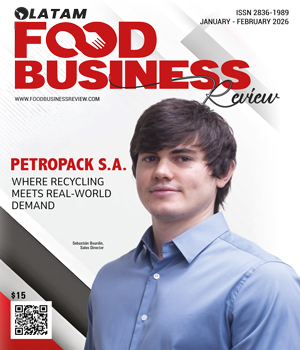
As consumer expectations shift across South America, brands are under pressure to deliver packaging that performs better, looks sharper on shelf and advances circularity goals. Flexible packaging has become a strategic lever, but real progress requires more than switching materials. It demands partners who understand production realities, move quickly and bring technical rigor to every stage of development. For many global and regional brands, that partner is Petropack, the Argentine, family-owned flexible packaging manufacturer that has grown into a regional reference point for recyclable innovation, service, and reliability “We see sustainability as the priority, delivering recyclable materials, recycled content and greener processes that support customers,” says Sebastián Bourdin, sales director. A Family Business with Regional Scale Founded in 1986 by two brothers who remain the company’s sole shareholders and active leaders, Petropack today employs around 700 people and operates five plants in Entre Ríos. The family-run structure gives clients something increasingly rare: direct access to decision-makers, rapid response times and a partner-level relationship rather than a commodity supplier dynamic.
Top Wholesale Coffee Product Supplier in Latin America 2026
Before a cup of coffee settles into a mug that steadies someone’s morning, it starts as a promise in the fields. A farmer walks through rows of cherry-red fruit, tending trees that have shaped their lives for decades. For them, the land is not just where coffee is produced; it’s heritage and livelihood. But beyond the beauty of the harvest lies a harder truth: once the coffee leaves their hands, so does most of its value. Multiple Intermediaries dilute their share, leaving skilled generational producers struggling under a system that rarely rewards the hands that sustain it. What problem in the traditional coffee value chain led to Gento Coffee Roasters’ founding? Gento Coffee Roasters was created to change that. Founded by Ashley Prentice, a third-generation Guatemalan coffee producer, the company gives farmers direct access to the market. By working closely with producers and selling straight to global buyers, Gento ensures every harvest is valorized and farmers receive fair, sustainable prices. The model removes layers of intermediaries, allowing wholesale partners to join a mission where great coffee, reliable quality, and meaningful impact grow together. The company caters to clients in local and international markets, servicing countries like the U.S., Canada, Europe, and Latin America for a diverse chain of boutique cafés, restaurants, and retail buyers. “Our distinction lies in the fact that we stand behind the quality of our coffee and the impact it creates. We work at origin, spend time on the farms, know each producer personally and ensure their craftsmanship is reflected in every cup,” says Prentice. What sourcing transparency and product options attract wholesale customers to Gento Coffee Roasters? What draws these customers lies in the stories behind the coffee. Many want a true farm-to-cup experience where single-origin lots with the farmer’s name, background, and process clearly shared. Others seek trustable blends designed for espresso or drip programs, specially curated to their volume needs. Catering to this, the company offers private-label services, high volume blends, and single-origin micro lots including custom mix and packaging for wholesale partners. Based on client requirements, whether its signature espresso profile or fully branded retail product, Gento roasts and delivers each order with care. How does Gento Coffee Roasters structure quality tiers to support producers and market needs? To accommodate the wide spectrum, the company purchases multiple quality tiers from the same producers, what it describes as the ‘triangle’ of quality. Ranging from rare top-tier micro-lots to mid and lower-tier volumes, it pays a premium and places each tier where it fits best in the market. .

Proteins Production in Latin America

Few ingredients have gone from agricultural waste to global health staple quite like whey. Once discarded, it now powers the billion-dollar fitness and nutrition industry. Behind this transformation are innovators who didn’t just see a byproduct—they saw potential. One of them is Sooro Renner, a company reshaping the functional dairy landscape through innovation, scale, and service. “Our growth has always been guided by precision, trust, and deep technical partnerships— starting from Brazil and now reaching the world,” says Claudio Hausen de Souza, Vice President of Commercial and Marketing. Today, Sooro Renner is the largest whey processor in Latin America by volume, with more than two decades of experience. It supplies high-quality ingredients for both human and animal nutrition and holds full export licensing to serve clients worldwide across a wide array of food and beverage sectors. Its product portfolio is designed for both performance and versatility. The company’s Whey Protein Isolate 90 percent delivers ultra-high protein content with less than one percent milk fat—ideal for use in nutritional supplements and high-protein dairy products. For broader application needs, its Whey Protein Concentrate 80 percent is available in regular, instant, and lactose-free forms, making it suitable for everything from protein shakes to ice creams and baked goods. The company also offers WPC 60 percent and WPC 34 percent, which provide excellent texture, solubility, and performance in dairy beverages, energy drinks, and processed foods. Sooro Renner’s whey powder—a blend of lactose, protein, and reduced mineral salts—adds rich dairy flavor and enhances the consistency of chocolates, processed meats, and more. In addition, it produces permeate, which is used in both food and feed formulations, ensuring every element of whey is optimized.
CXO INSIGHTS

Is The Food Industry Inclusive?
Angelo Kawakami, Innovation Manager, Panco

The Experience of Serving the Customer's Customer - and How We Can Grow From It
Cristina Faganello, Managing Director Food South America, Cargill
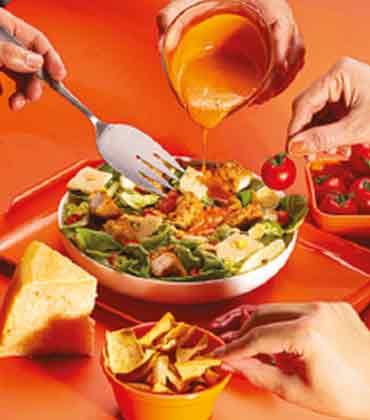
The Evolution of Boali: A Tale of Pioneering the Healthy Food Restaurant Industry and Entrepreneurial Excellence
Victor Giansante, Director of International Development, Boali
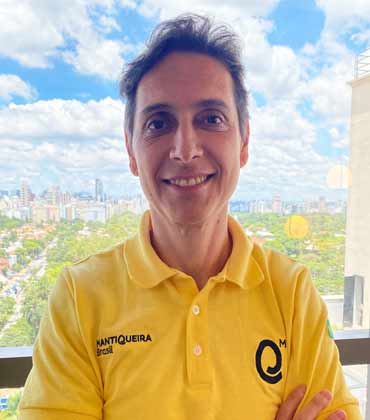
Crafting Brand Excellence: Navigating the Commoditized Egg Market with Success
Andre Carvalho, Director of Marketing, Innovation and Business Unit Leader - Egg Products & Drinkable Eggs, Mantiqueira Brasil

Innovation as a key factor for Development of Specialty Products in Fish Aquaculture Rendering
Christopher Holmes, Research and Development Manager, Fiordo Austral
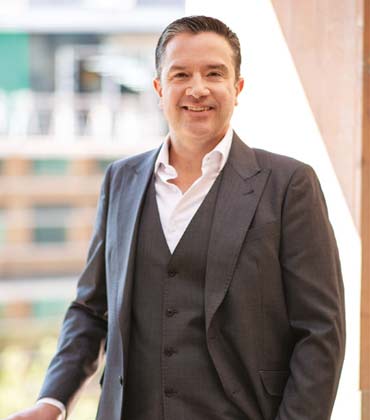
Sustainable Sourcing
Javier Carnevali, Chief Procurement Officer, Grupo Herdez

Supply Chain Leadership
Marcus Augusto Silva, Supply Chain Director, GTFoods


IN FOCUS
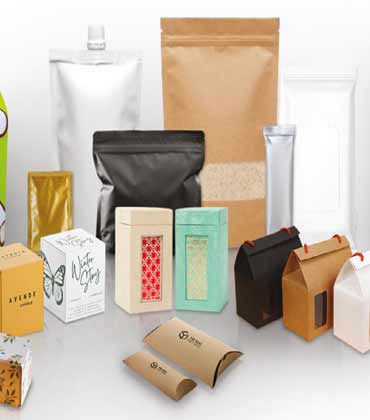
Flexible Packaging Is Transforming Food Branding in Latin America
Flexible packaging in Latin America is evolving into an interactive branding tool—blending digital features, local storytelling, aesthetics, and functional design to deepen consumer trust and emotional connection.
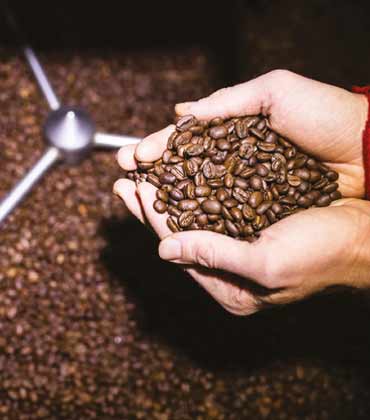
The Transformation of Latin America's Wholesale Coffee Industry
Latin America’s wholesale coffee sector is evolving into a high-tech, quality-driven market, emphasizing specialty beans, digital traceability, regenerative practices, and premium partnerships over traditional commodity models.
EDITORIAL
Designing Smarter Supply Flows For Food Brands
Food and beverage operations are no longer defined only by production capacity or a single supplier contract. They now stretch across sourcing, processing, packaging and last-mile distribution, shaped by volatile input costs, sustainability pressure, tighter quality expectations and the need to keep shelves stable across regions. In response, many brands are moving from reactive buying to connected, risk-aware supply planning.
The shift often starts at the shelf. Flexible food packaging is gaining traction as brands aim to extend freshness, cut transit damage, and meet new material needs without slowing down. With strong barrier performance, lightweight formats and faster changeovers, it improves shelf life, simplifies logistics and supports quicker launches and regional variants.
That same need for consistency carries into what goes inside the pack. Coffee is highly sensitive to variability, so wholesale suppliers are expected to deliver more than bulk volume. Buyers look for steady availability, repeatable flavor profiles, clear origin documentation and formats ready for retail, HoReCa and subscription channels.
Expectations for reliability and traceability are also reshaping protein supply. Protein production in Latin America is expanding to meet global demand, with a greater focus on processing efficiency, export readiness and quality controls that align with international standards. As production scales, brands are looking for partners that can prove compliance, maintain consistent specifications and support long-term contracting with fewer surprises.
In this edition of Food Business Review Latin America, we spotlight Javier Carnevali, Chief Procurement Officer at Grupo Herdez, and Tamara Lopes, Corporate Executive Sustainability Manager at Minerva Foods, who show that sustainable supply is built by aligning procurement to stakeholder needs and using technology to strengthen traceability and supplier-risk control across the value chain.
We hope the insights from industry leaders and the solutions featured here help you strengthen supply resilience, improve compliance readiness, and build long-term trust with customers and partners.
