
Thank you for Subscribing to Food Business Review Weekly Brief


How does MKS deliver large-scale temporary kitchens under tight deadlines? Mobile Kitchen Solutions (MKS) is setting the benchmark in delivering fully integrated, temporary kitchen service deployable at scale under tight deadlines. Its turnkey kitchen systems are designed to perform at the level of permanent installation. Clients can maintain uninterrupted, large-volume foodservice operations anywhere, anytime. It combines technical precision and end-to-end accountability under one umbrella, ensuring that even the most complex culinary environments remain fully functional. In a field where the margin for error is razor thin, MKS stands out for efficiency, technical mastery and ability to mobilize at a moment’s notice. “Downtime is money in this industry. We make sure that our clients are not kept waiting,” says Tom Brown Jr., CEO. For more than a decade, MKS has built its reputation on responsiveness, customization and a single-point-of-contact service model that delivers a customer experience as personal as it is professional. The client-first mindset is a hallmark of the brand and has accelerated its growth across both long-term renovation projects and high-profile special events. Its footprint spans major hospitality events, large universities, stadiums, motorsports circuits and emergency sites across the U.S. With its involvement in the upcoming FIFA events and expanded commitments in motorsports, MKS is establishing a global presence.

Premium Gluten Free Bread and Protein Wraps Company of the year 2026
How did BFree Foods redefine expectations in gluten-free products? When BFree Foods entered the gluten-free market in 2011, the category was still defined by compromise. Gluten-free bread and bakery products were available, but they often failed to meet expectations for taste, texture, and overall satisfaction. For many consumers, eating gluten-free meant settling for bread that was dry, crumbly, oddly shaped, or nutritionally empty. BFree Foods was created to change that experience. Recognizing an underserved and often overlooked community, the company set out to reimagine gluten-free products. Rather than simply improving gluten-free bread, BFree focused on engineering products that could stand shoulder to shoulder with conventional baked goods. Every innovation was driven by a simple goal: to create gluten-free products that delivered the same level of enjoyment, quality, and functionality as their wheat-based counterparts. From the beginning, BFree positioned gluten-free eating as something that adds joy and choice. Today, that philosophy continues to shape the company’s product range, with innovations that are high in fiber and protein, support gut health, and offer lower net carbohydrates. Each product is gluten-free, wheat-free, and dairy-free, without compromise. Carefully selected ingredients such as ancient grains, carrot fiber, and plant-based proteins enhance both nutritional value and taste, bringing more of the good stuff to the table..

Nutritional Supplement Company of the Year 2026

Choosing to fund human clinical trials on finished products is not a common decision in the supplement space. The cost is significant, the timelines are long, and the outcome is never guaranteed. Yet that choice reflects a deeper operating philosophy, one shaped by accountability to results rather than confidence in claims. At Jigsaw Health, clinical validation is treated as an operating discipline and not a marketing asset, guiding product development through evidence that can withstand scrutiny. Founded nearly two decades ago, the family-owned nutritional supplements company prioritizes customer experience, scientific validation, and transparency. “Integrity is not what we say when it’s convenient; it’s what we choose when the outcome is uncertain,” says Natalie Ochoa, president. “When truth comes before results, trust becomes inevitable.” A Market That Rewards Claims Why has transparency become a competitive necessity in supplements? Dietary supplements occupy a gray zone between food and pharmaceuticals. They move quickly, face limited pre-market oversight, and rely heavily on consumer trust. Over the past decade, that trust has been strained by high-profile enforcement actions, misleading claims and inconsistent quality standards. Against that backdrop, transparency is no longer a ‘nice to have’ but a competitive necessity. Jigsaw Health’s leadership recognized this early. Rather than competing on novelty or trend cycles, the company focused on long-term credibility, building formulations slowly, investing in testing, and cultivating direct relationships with customers and healthcare practitioners. That decision sacrificed marketing velocity but aligned the brand with durability..
Top Food Broker Company 2026
Why does successful foodservice product placement depend on alignment across the entire supply chain? Success in foodservice is not simply about getting a product listed. As Robert Arnold (Bob), president of Suncoast Food Brokerage, explains, it is a ‘chain effect’ that runs from the manufacturer to the distributor to the operator, and ultimately to the customer walking into the restaurant. What determines long‑term success is whether that product actually works in the field—whether it matches a distributor’s movement expectations, supports an operator’s menu strategy and delivers value to the end customer. Suncoast Food Brokerage works as the facilitator within that chain. Through back-and-forth communication among manufacturers, distributors and operators, it ensures products deliver value, meet menu needs and perform consistently in the market. Aligning each link in that chain before and after placement is how Suncoast turns that work into sustained movement. That disciplined, relationship-driven execution earned Suncoast Food Brokerage the recognition as Top Food Broker Company 2026. Deep Relationships, Not Transactions How do relationship-driven interactions strengthen collaboration between manufacturers, distributors, and operators? Suncoast’s work begins and ends with relationships because, as Bob emphasizes, that is where value is created. “One of the things that sets us apart is the personal, relationship-driven approach we take with our customers. We make it a priority to build strong connections with both distributors and operators we engage with every day.” For manufacturers, that focus translates into working with a team that understands market nuances and engages early to align product strategy with actual demand. For distributors and operators, it means working with a broker who listens, understands their business and brings forward products that fit operational needs, strengthening confidence in product decisions..

Kitchen Exhaust Cleaning

Commercial kitchens don’t just serve meals, they keep communities running. From nursing homes and hospitals to casinos and prisons, industrial kitchens should be well-maintained and free of hazardous grease buildups to ensure smooth operations and prevent fire hazards. Weeks of unnoticed accumulation can lead to a wobbly exhaust fan or a sudden inspection notice that could hamper operations. In such scenarios, Professional Kitchen Exhaust Cleaning (PKEC) saves the day with its timely deployment of reliable cleaning crews and round-the-clock availability. The PKEC crew mobilizes as if it were a part of the kitchen staff, setting high standards across the Central Iowa region. Its answer to compliance deadlines is a team that ensures all ducts, hoods, fans and rooftops are thoroughly cleaned and ready. PKEC can roll out rapidly when needed by the client, sometimes even in the early hours of the day or late into the night. “If my schedule is packed, I’ll still find a way to fit them in that week. Even if it means heading out at four in the morning to get the job done,” says Cyle Hawkins, CEO. Photos, Reports and Compliance Quality assurance is the backbone of PKEC. Operating on a compliance-ready model, it ensures crew members take both before and after photos, providing clear documentation for the field service report. This eases the load for fire marshals and insurers once the job is done. Clients have a sense of relief rather than panic, with doors open, grills hot and the kitchen prepared for the next rush.
Top Beverage Alcohol Brands Solution 2026
When the pandemic reshaped how beverage alcohol brands connected with consumers, access expanded faster than insight. Direct-to-consumer channels accelerated, regulations eased, and distilleries became both experiential destinations and digital storefronts. Yet as transactions increased, a deeper inefficiency emerged. Brands could sell, but they struggled to connect experiences, data, and demand into a system that sustained growth. Brandjam was founded to close that gap. Built specifically for the beverage industry, Brandjam is a platform that centralizes fragmented data sources, captures first-party consumer insights, and connects those insights directly to sales, retail, and distribution execution. The result is a modern operating layer that allows brands to move faster, see demand more clearly, and turn consumer interactions into measurable growth. View from Inside the Industry Brandjam’s origins are closely tied to founder Dan Robbins’ experience inside the system he set out to modernize. Trained as a data scientist, Robbins spent over a decade in the beverage alcohol industry, including serving as the Head of Data Science at Brown-Forman and Head of Commercial Analytics and Data Strategy at Provi. These positions offered firsthand exposure to how major brands approached strategic decision-making.

CXO INSIGHTS

Maintaining a Protein Rich Diet
Eric Ciappio, Senior Manager, Nutrition Science, Balchem Human Nutrition & Health
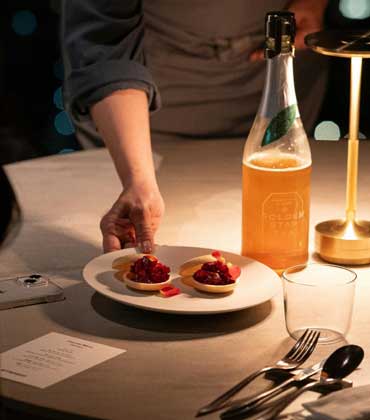
Three Core Strategies for Elevating Food Services
Jessica Zucker, VP of Marketing Innovations and Strategy, Eurest USA

Quality Assurance Excellence and Market Insights for QSR
Eric Jackson, Senior Quality Assurance Manager, Long John Silvers

Transforming the Beverage Alcohol Industry
Todd Morillo, Director of Sales Technology, Eagle Rock Distributing Company
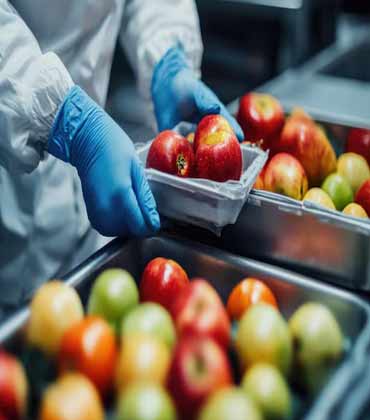
Role of Preventative Programs like EMP to Ensure Food Safety and Quality
Johanna Ramirez, Director of Microbiology & Food Safety, The Coca-Cola Company


IN FOCUS
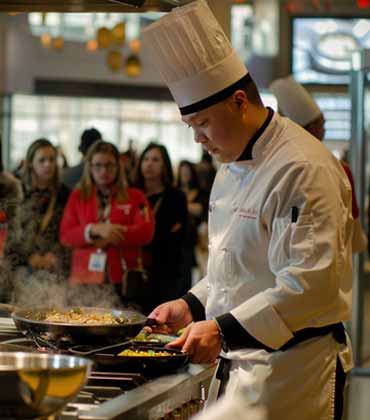
The Impact of Temporary Kitchen Rentals on Event Catering and Large-Scale Food Production
Temporary kitchen rentals enable fast, scalable, compliant event catering, improving efficiency, food quality, and reliability for large, complex gatherings.

Navigating the Nutritional Supplement Landscape: Trust as a Competitive Advantage
Nutritional supplement leaders grow through consumer trust, transparent practices, ethical data use, and personalized insights that build lasting loyalty.
EDITORIAL
Building Reliability In Modern Food Operations
The food industry is navigating a period where resilience, product integrity and consumer trust define success. This edition of Food Business Review explores how organizations are strengthening reliability, transparency and quality while adapting to evolving demands.
Our cover story features Mobile Kitchen Solutions, recognized as the Most Reliable Temporary Kitchen Rental Service 2026.
The company has established itself as a dependable partner for organizations that require uninterrupted foodservice operations during renovations, emergencies or large-scale events. By delivering turnkey temporary kitchen systems with rapid deployment and technical precision, Mobile Kitchen Solutions enables institutions, universities, stadiums and hospitality operators to maintain large-volume culinary operations without disruption.
This issue also recognizes several organizations that are shaping distinct segments of the food and nutrition landscape. Jigsaw Health, recognized as Nutritional Supplement Company of the Year 2026, has differentiated itself through a testing-first philosophy, investing in human clinical trials, rigorous third-party verification and transparency to strengthen consumer and practitioner trust in supplements.
Meanwhile, BFree Foods, recognized as Premium Gluten Free Bread and Protein Wraps Company of the Year 2026, has advanced the gluten-free category by focusing on taste, nutrition and real-world functionality. Suncoast Food Brokerage, recognized as a Top Food Broker Company 2026, demonstrates how disciplined relationships among manufacturers, distributors and operators can ensure products succeed not only in placement but also in long-term menu performance.
This edition also features insights from industry leaders focused on operational excellence. Eric Jackson, Senior Quality Assurance Manager at Long John Silvers, highlights the importance of supplier quality management and collaborative partnerships to maintain consistency across QSR operations. Johanna Ramirez, Director of Microbiology and Food Safety at The Coca-Cola Company, highlights the evolving role of environmental monitoring programs in strengthening quality systems beyond traditional food safety frameworks.
Together, these perspectives reflect a disciplined execution, stronger quality systems and solutions, enabling food organizations to operate with confidence. We invite readers to explore this edition and understand the strategies shaping the future of the food industry.
