
Thank you for Subscribing to Food Business Review Weekly Brief


How does MKS deliver large-scale temporary kitchens under tight deadlines?
Mobile Kitchen Solutions (MKS) is setting the benchmark in delivering fully integrated, temporary kitchen service deployable at scale under tight deadlines.
Its turnkey kitchen systems are designed to perform at the level of permanent installation. Clients can maintain uninterrupted, large-volume foodservice operations anywhere, anytime. It combines technical precision and end-to-end accountability under one umbrella, ensuring that even the most complex culinary environments remain fully functional. In a field where the margin for error is razor thin, MKS stands out for efficiency, technical mastery and ability to mobilize at a moment’s notice.
“Downtime is money in this industry. We make sure that our clients are not kept waiting,” says Tom Brown Jr., CEO.
For more than a decade, MKS has built its reputation on responsiveness, customization and a single-point-of-contact service model that delivers a customer experience as personal as it is professional. The client-first mindset is a hallmark of the brand and has accelerated its growth across both long-term renovation projects and high-profile special events.
 Its footprint spans major hospitality events, large universities, stadiums, motorsports circuits and emergency sites across the U.S. With its involvement in the upcoming FIFA events and expanded commitments in motorsports, MKS is establishing a global presence.
Serving the Full Spectrum of Temporary Culinary Needs
What services are included in MKS temporary kitchen systems division?
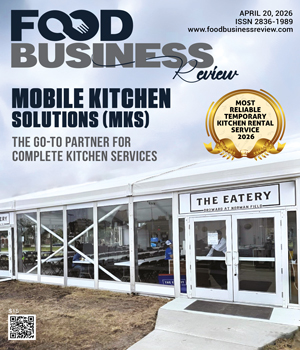
MKS operates through two integrated divisions—temporary kitchen systems and special event services—to meet a full spectrum of kitchen demands. Its temporary kitchen systems services include long-term installations deployed during extensive renovations, expansions or critical infrastructure failures. Systems range from individual kitchen trailers to fully built modular complexes and spacious tented structures with open floor plans.
Each unit is tailored to a facility’s needs. The team designs layouts around flow, capacity, safety codes and utility connections. It supplies ovens, cooklines, walk-in and reach-in refrigeration, dishwashing systems, prep areas, sinks, serving stations and portable food systems with exhaust and fire suppression, all delivered in top condition and ready for immediate use.
This approach is particularly valuable in renovation environments where kitchen downtime disrupts operations. MKS ensures continuity by designing systems that replicate or exceed the functionality of a permanent kitchen.
It also manages HVAC, generators, power distribution and plumbing in-house, for seamless project facilitation. Experienced, on-site managers ensure smooth operations and relieve clients of dealing with multiple trades.
Downtime is money in this industry. We make sure that our clients are not kept waiting.
The team’s involvement is extensive. They attend planning meetings, support inspections, review drawings and advise on configurations based on past projects. Months before an event launch, they begin working with caterers, stadium staff and hospitality partners.
 “Our difference lies in how informed we keep our customers. Every rental comes with clear, detailed documentation, giving clients the confidence to operate and maintain equipment properly,” says Brown.
Setting MKS apart is its ability to accommodate capacity and do so with exceptional speed. Few companies carry the volume of inventory required for mega-events like the U.S. Open or the National Jamboree for Scouting America. Double-stack ovens, portable food systems, refrigerated trailers, complete tent kitchens and specialized pods are assets in the MKS fleet.
A Service Model Built for Speed and Accountability
 How does MKS ensure speed accountability and consistent communication throughout?
Complementing its expansive inventory is a distinct approach to every project. Every call is returned within an hour. And every issue is handled by the same person who initiated the project.
“Clients have a single point of contact throughout the entire project, whether it’s a five-day event or a two-year renovation,” says Brown.
When clients report equipment concerns, the team connects them with specialists who can diagnose issues on the spot. Local partners from its national network are dispatched to expedite repairs, and replacements are handled without delay.
Responsiveness extends to site visits. Brown and his team regularly conduct on-site inspections, walkthroughs and troubleshooting. Their presence demonstrates accountability and ensures client confidence in the support they receive throughout the project.
 Experience fuels this efficiency. All managers have worked in the industry for over 20 years, making problem-solving instinctive. Whether navigating health codes, adjusting layouts or recommending equipment alternatives, they provide practical guidance rooted in decades of fieldwork.
Built on Experience, Elevated by Personal Touch
MKS’ story began with Brown’s father, Tom Sr., who spent decades building a national special events operation within United Rentals, Inc., an equipment rental company. When that division was sold and redirected toward disaster relief, the kitchen services segment, which many large institutions relied on, was no longer available. The absence of a dedicated, service-driven temporary kitchen provider was an issue Brown was determined to address. He leveraged his years of industry insight and intact client relationships to launch MKS in 2009, restoring the level of service customers relied on.
-
Clients have a single point of contact throughout the entire project, whether it’s a five-day event or a two-year renovation.
Clients who had worked with the earlier ventures followed Brown into the new company. What drew them in was not just equipment, but trust. They valued direct communication, on-site involvement and a team that showed up when the stakes were high. That foundation shaped MKS’ operating philosophy.
Turning Up When it Truly Matters
 Success stories demonstrate MKS’ problem-solving ability under pressure. When the University of Florida discovered mold beneath its dining facility floor, the kitchen had to shut down immediately. The campus was unprepared, and alternative solutions were expensive or impractical. Feeding thousands of students daily was a major and urgent challenge.
The university reached out to MKS based on recommendations from other institutions. Brown’s team flew to Florida the next day to address the logistical puzzle. Kitchen trailers were too small for the required volume, and a modular facility could not be deployed quickly enough to meet the immediate demand.
The team proposed structured tent kitchens that could be built, equipped and operational within three to five days. While construction began, they delivered enough kitchen trailers to keep food service running. Once the tented facility was ready, the team assisted in relocating equipment and stabilizing operations.
The result went beyond solving an emergency. The university avoided significant costs and service disruption and gained a long-term partner. They later awarded MKS vendor status within the state’s institutional system. The company now advises them on emergency planning, complete with timelines, pricing models and utility expectations.
Growth Guided by Control and Continuity
How is MKS planning controlled growth and future preparedness strategically?
 The focus on long-term partnership also shapes its growth strategy. Brown emphasizes controlled growth that protects MKS’ signature service quality. It is preparing to double its labor force over the next few years and significantly increase warehouse space to support growing demand.
Locations in Texas, Florida, Kentucky and North Carolina will transition from staging yards into fully staffed operational branches. Inventory investments exceeding one million dollars are planned for the upcoming cycle, supporting both renovation projects and large-scale events. The team is also exploring supplementary offerings, such as bunkhouses, shower trailers and laundry trailers, that complement their existing kitchen systems and help support disaster relief operations or event hospitality needs.
“We want to deepen our abilities, not expand into areas we can’t control,” says Brown. “Growth has to align with what we’re great at.”
Research-Driven Strategy and Preparedness
 Its formula for success is underpinned by rigorous research. The MKS team studies the age and condition of kitchens across hospitals, universities and stadiums. They track national renovation cycles, emerging technologies, natural disasters and geopolitical events that trigger temporary kitchen demand.
It also maintains event calendars years in advance, tracking everything from Ryder Cup events to All-Star games. This preparedness enables it to initiate early discussions, secure commitments and prepare to meet equipment needs well in advance.
Setting the benchmark for reliability means being ready before reliability is tested. That is the standard MKS continues to raise—consistently, and ahead of time.
Ensuring Continuity: Evaluating Temporary Kitchen Rental Services For Complex Foodservice Environments
Temporary kitchen rental services occupy a specialized position within the equipment rental sector. Their importance is often realized only when a crisis or renovation disrupts foodservice operations. Universities, hospitals, stadiums, corporate campuses and event organizers cannot pause meal production without financial, contractual or reputational consequences. When mold is discovered under a dining hall floor, a stadium prepares for a global tournament, or a renovation extends beyond schedule, the question is no longer whether to rent, but how to restore capacity quickly without compromising compliance or food quality.
The distinguishing feature of a credible temporary kitchen provider is not simply inventory scale. It is the ability to translate an urgent operational gap into a functioning kitchen environment under compressed timelines. Buyers benefit from a partner that responds immediately, clarifies scope directly with on-site culinary teams rather than relying solely on purchasing intermediaries, and reduces miscommunication before it escalates into delay. Rapid initial contact, direct lines of communication and continuity with the same representative throughout the project materially affect how quickly a site stabilizes.
Customization also separates commodity rental from strategic support. Foodservice environments vary in footprint, menu complexity, inspection requirements and utility access. A provider that can tailor layouts, configure equipment mixes and adapt trailer or container sizes to suit the actual workflow of cooks avoids forcing the client into a pre-set template. Flexibility in structure options, whether modular units, structured tented kitchens or individual trailers, enables a solution aligned to duration, budget and physical constraints.
Mobile Kitchen Solutions (MKS) the third dimension that determines value is depth of support during operation. Temporary kitchens operate under scrutiny from health inspectors, event stakeholders and end customers. Detailed equipment documentation, maintenance guidance and on-site assistance during inspections reduce uncertainty for management teams. Service responsiveness is equally critical. Downtime directly affects revenue and guest experience. A provider that can coordinate in-house technicians or activate a nationwide repair network within hours mitigates risk and preserves continuity.
Turnkey capability further simplifies oversight. Projects that require separate vendors for structure, HVAC, power distribution, plumbing and kitchen equipment create layered coordination challenges. A single point of accountability streamlines scheduling, utilities planning and compliance preparation. For large events, where dozens of ovens or refrigeration units may be distributed across hospitality zones, inventory depth and logistical planning become decisive factors.
Growth discipline also matters. A firm that expands inventory, staffing and facilities in measured fashion is more likely to sustain service standards across regions. Proactive market tracking, whether monitoring infrastructure renovation cycles or future event calendars, signals preparedness rather than reactive scrambling.
Within this landscape, Mobile Kitchen Solutions represents a mature model of how temporary foodservice continuity can be delivered. It operates nationwide across renovation, disaster response and major event environments, offering structured kitchens, modular container systems and trailers ranging from 24 to 48 feet. It supplements core kitchen assets with in-house structures, generators, HVAC, plumbing and power distribution, enabling a unified deployment rather than fragmented coordination.
Management leadership brings decades of sector experience, and the company maintains direct contact from initial inquiry through project completion, including rapid response policies and nationwide repair support. Its work across universities, motorsports, PGA events and large-scale sporting venues reflects both inventory scale and logistical planning depth. For executives responsible for safeguarding uninterrupted meal service, it stands as a dependable benchmark within this specialized field.
...Read more
Temporary Kitchen Rental Services Info
Q1
Why is Mobile Kitchen Solutions considered among top temporary kitchen rental services providers?
Mobile Kitchen Solutions is considered among top temporary kitchen rental services providers because it delivers fully customizable mobile kitchens, modular facilities and temporary dining structures for short-term and long-term operations nationwide. The company supports renovations, emergency response, special events and institutional foodservice projects with turnkey solutions that include refrigeration, plumbing, HVAC and power distribution.
Q2
How does Mobile Kitchen Solutions differentiate its approach to temporary kitchen rental services?
A turnkey and highly customizable service model defines its approach. Mobile Kitchen Solutions offers kitchen trailers ranging from 24’ to 53’, modular container kitchens and temporary dining facilities that can be configured around specific operational needs. Its temporary kitchen rental services include planning, layout development, equipment integration and onsite setup, allowing organizations to deploy fully operational kitchens with minimal disruption.
Q3
How does the company support customers throughout a temporary kitchen project?
Project coordination and ongoing support shape the customer experience. Mobile Kitchen Solutions conducts site visits, assists with utility planning and works directly with customers on permits, inspections and scheduling. Its temporary kitchen rental services also include delivery, installation, teardown and 24/7 repair support, ensuring operational continuity throughout the rental period.
Q4
What value do Mobile Kitchen Solutions’ temporary kitchen rental services deliver?
Operational continuity and flexibility define the value delivered. Mobile Kitchen Solutions helps organizations maintain foodservice operations during renovations, emergencies or large-scale events without building permanent infrastructure. Its temporary kitchen rental services support hospitals, universities, correctional facilities, motorsports and hospitality operations with scalable kitchen environments tailored to each project’s requirements.
Q5
What role do equipment inventory and customization play in its services?
Extensive equipment availability strengthens its rental capabilities. Mobile Kitchen Solutions maintains a broad inventory that includes cooking equipment, portable refrigeration, dishwashing systems, prep stations and climate-controlled dining structures. Its temporary kitchen rental services allow layouts and equipment packages to be customized for different production volumes, menus and site conditions, supporting both compact and high-capacity operations.
Q6
Why is Mobile Kitchen Solutions relevant in today’s foodservice environment?
Organizations increasingly need flexible foodservice infrastructure that can adapt quickly to changing operational demands. Mobile Kitchen Solutions addresses this need through temporary kitchen rental services that combine mobility, customization and nationwide deployment. Its ability to support emergency response, healthcare renovations, special events and long-term construction projects ensures continued relevance in environments where uninterrupted foodservice operations are critical.
Company :
Mobile Kitchen Solutions (MKS)
Management Tom Brown Jr., CEO
Description
Mobile Kitchen Solutions provides turnkey temporary kitchens for renovations, emergencies and major events. Its services include kitchen trailers, modular facilities, tented kitchens and full support equipment. Known for responsiveness and technical expertise, the company delivers dependable solutions for demanding culinary environments.