
Thank you for Subscribing to Food Business Review Weekly Brief

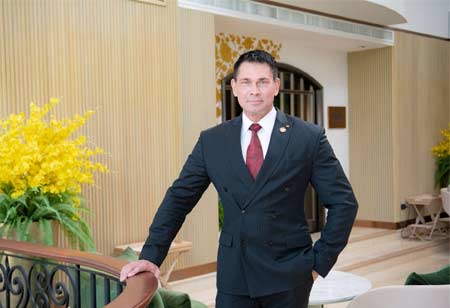
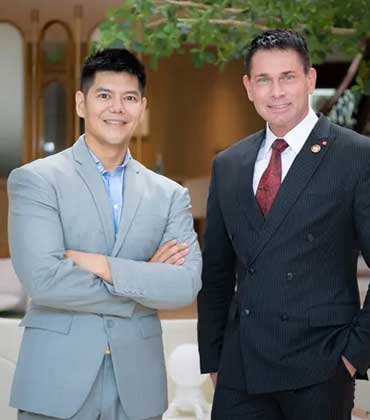 Khun Noppadon Khamsai, Co-founder and Dr. Alexey Tyutin, Co-founder, Director
For most caviar producers, harvesting roe marks the end of a sturgeon’s production life. Thai Sturgeon Farm (TSF) has taken a different approach. By using live egg extraction, the farm keeps its female sturgeons healthy and enables them to produce caviar repeatedly. As the fish grow older, their eggs become larger and the yield increases, improving both product quality and long-term productivity.
Based in Hua Hin, Thailand, TSF was established by Dr. Alexey Tyutin and his business partner, Khun Noppadon Khamsai. Nearly 1,000 sturgeons are individually chipped and tracked from the age of three, while ultrasound is used to monitor their development and determine the right time for production. Before roe extraction, the fish undergo a three-month winter simulation at approximately +5°C, recreating an important part of their natural seasonal cycle.
“Our winter simulation gives the caviar a cleaner, firmer texture with less oiliness and a gentler opening taste, while preserving its natural aftertaste,” says Dr. Tyutin, co-founder and director.
The farm produces its caviar without preservatives and with a lower salt content adapted to local preferences. While European caviar commonly contains around 3.5 to 3.8 percent salt, TSF keeps its standard product below 3.3 percent and can adjust the level to meet specific customer requirements.
The benefits of keeping the fish through successive production cycles are also reflected in egg size and yield. At first maturity, eggs typically measure around 2.6 to 2.8 millimeters, increasing to approximately 3.3 to 3.4 millimeters as the fish mature. At the same time, roe yield can rise from about 10.5 percent to nearly 15 percent. These larger eggs are an important part of the farm’s plans for premium international markets, including Japan and the U.S.
TSF operates a high-tech recirculating aquaculture system (RAS). Water from a deep well continuously passes through drum filtration, biological filtration, ozone chambers and ultraviolet treatment before returning to the tanks. Only a small proportion of water is removed during the treatment process, while solar panels provide part of the farm’s daytime electricity needs. Sensors continuously monitor oxygen, electrical conductivity, salinity, pH, water levels and pressure, allowing the system to respond quickly to changing conditions.
-
Our winter simulation gives the caviar a cleaner, firmer texture with less oiliness and a gentler opening taste, while preserving its natural aftertaste.
The same attention to control and traceability continues during processing. After extraction, the roe is cleaned with sterile water, dried, salted with natural salt and stored in sterilized glass jars under approximately 98 percent vacuum. Every production lot can be traced back to its storage jar and originating fish, and samples from each lot are submitted to an independent central laboratory for testing.
TSF’s approach to responsible caviar production has received recognition for its low environmental impact, including the Top Sustainable Caviar Producer in APAC 2026 award. The farm holds ISO 9001 and ISO 14001 certifications, with its processing operation licensed and products registered by the FDA. It has also obtained HACCP for the U.S. market, ISO 22000 and Halal certification.
TSF’s recently completed processing building was designed according to HACCP requirements and approved by the FDA. These capabilities support established relationships with leading hospitality customers, including the famous PRU restaurants, Rosewood hotels, State Tower restaurants, Centaras and Anantaras.
“All our customers are using our brand with pride,” says co-founder Khamsai.
For selected restaurant partners, the farm also creates exclusive labels carrying their own branding, strengthening the connection between locally produced caviar and the hospitality businesses serving it. Rather than competing through scale, TSF has built its position through differentiation: local production, lower salt content, preservative-free processing, larger eggs, full traceability and a harvesting method that keeps the sturgeon alive.
The farm is now expanding its international presence, developing airline partnerships and introducing its larger-egg caviar to new premium markets. It is also developing an innovative preservation method for which a patent application has been submitted. What began with a simple principle of keeping sturgeon alive has evolved into a broader philosophy of responsible aquaculture, combining animal welfare, product quality, traceability and long-term sustainability.
Fresh Caviar from Responsible Sturgeon Farming
Premium caviar purchasing is shaped by a narrow margin for error. Salt level can alter the eating experience while preservation choices affect freshness. Hospitality buyers may also need a product that fits a particular market rather than a generic global profile. A supplier that treats taste as fixed can therefore create a mismatch even when the roe itself is sound. Buyers should look for disciplined control over salting and preservation, paired with enough flexibility to match local preferences without masking the product with unnecessary additives.
Sustainability also carries more weight when it can be traced to the farming method rather than left as a label. Sturgeon production raises direct questions about fish welfare and water use. Buyers may also examine how farms manage the biological cycle behind roe quality. Non-lethal extraction changes that equation because the same fish can continue through later maturities, while recirculating aquaculture can reduce dependence on continual water replacement. For hospitality groups that want locally produced food with a lower environmental burden, farming practice becomes part of the sourcing decision rather than a separate corporate statement.
Food safety adds another layer. Premium positioning does not compensate for weak batch control or unclear handling between harvest and final packaging. Caviar buyers need documented hygiene procedures and traceability that can follow product back through storage and source records. Independent testing, recognized processing standards, source records and controlled packaging all matter because the product moves through several stages before reaching a restaurant or distributor. A credible producer should be able to show how those controls work in practice, not simply display certification names.
Consistency is harder to judge from a single tasting. Egg size and texture can change as fish mature, while temperature management before harvest can influence fat content and sensory quality. Reliable supply also depends on knowing where each fish sits in its cycle and preparing stock accordingly. For procurement teams, the stronger supplier is one that connects biological monitoring with production planning. That discipline supports repeatability without turning a premium food into an overprocessed one. Buyers comparing year-round supply claims should also examine whether fish records and production scheduling support the volumes being offered.
“Thai Sturgeon Farm’s caviar is produced without preservatives, with low salt levels that can be adjusted for larger orders.”
Commercial fit comes down to whether the producer can preserve those controls when orders vary. Private-label requirements and different salt preferences can affect the finished product, as can export packaging. Flexibility is useful only when the underlying production record remains intact. Buyers should therefore favor producers that can adapt the final presentation while keeping source identification and food-safety controls consistent from farm through dispatch.
Thai Sturgeon Farm merits consideration as a premier choice for buyers prioritizing sustainable caviar production. It uses non-lethal egg extraction and a recirculating aquaculture system, while fish are individually tracked and monitored through maturity cycles. Its caviar is produced without preservatives, with low salt levels that can be adjusted for larger orders. Thai Sturgeon Farm also links each packaged lot to source records and uses controlled glass-jar storage before final packing. International food-safety certifications and independent laboratory testing support that traceability. For buyers comparing premium caviar suppliers, its combination of animal preservation, controlled production, source traceability and food-safety oversight provides a practical basis for selection.
...Read more
Insights
The Future of Caviar: From Luxury Product to Sustainable Aquaculture
Dr. Alexey Tyutin, Managing director The greatest opportunity for the caviar industry is therefore not simply to produce more caviar. It is to produce better caviar with greater responsibility.
Sustainable Caviar Producers in APAC Info
Q1
What Distinguishes Sustainable Caviar Producers In APAC?
Sustainable Caviar Producers in APAC focus on how they raise sturgeon, collect roe and manage resources. This includes careful use of water and energy, fish welfare and clear product tracking. Recirculating aquaculture systems, controlled growing cycles and careful processing can help reduce waste while keeping caviar quality consistent.
Q2
How Does Thai Sturgeon Farm Apply This Model?
Thai Sturgeon Farm uses live egg extraction, which lets female sturgeons stay healthy and produce roe through repeated cycles. The farm chips and tracks nearly 1,000 fish from age three. It also uses ultrasound to monitor their growth and determine when they are ready for production. Before extraction, the farm puts the fish through a three-month winter simulation at about +5°C. These methods show how Sustainable Caviar Producers in APAC can use careful fish monitoring and longer production cycles to support fish welfare and maintain yield.
Q3
What Is Included In Sustainable Caviar Production?
Sustainable Caviar Producers in APAC may use closed or recirculating aquaculture systems, controlled water treatment, traceability and processing methods designed to reduce resource use. For buyers, these factors make sustainable production easier to assess beyond broad environmental claims, particularly when water use, fish longevity, food safety and product traceability can be documented. At Thai Sturgeon Farm, deep-well water moves through drum and biological filtration, ozone chambers and ultraviolet treatment before returning to the tanks. Sensors monitor oxygen, conductivity, salinity, pH, water levels and pressure. Solar panels also provide part of the daytime electricity supply.
Q4
Why Do Traceability And Processing Controls Matter For Premium Caviar?
For premium products, consistency is closely linked to what happens after harvesting. Sustainable Caviar Producers in APAC can strengthen quality control by linking each production lot to its source and maintaining documented handling conditions. The farm cleans roe with sterile water, uses natural salt, stores the product in sterilized glass jars under approximately 98 percent vacuum and traces lots back to the originating fish. Samples from each lot are also sent to an independent central laboratory.
Q5
How Can Sustainable Practices Affect Product Characteristics?
Sustainable Caviar Producers in APAC can connect responsible production methods with characteristics that buyers notice in the finished roe. At Thai Sturgeon Farm, the standard caviar contains less than 3.3 percent salt and is produced without preservatives. Egg size can also increase from roughly 2.6–2.8 millimeters at first maturity to about 3.3–3.4 millimeters as fish mature, while yield can rise from around 10.5 percent to nearly 15 percent.
Q6
What Should Buyers Evaluate When Comparing Producers?
Sustainable Caviar Producers in APAC should be evaluated through more than origin or price. Useful considerations include water-management systems, animal handling, traceability, food-safety controls, processing standards and evidence of repeatable product quality. Thai Sturgeon Farm holds ISO 9001 and ISO 14001 certifications and has HACCP, ISO 22000 and Halal certifications, while its processing operation is licensed and its products are registered by the FDA. Its focus on larger-egg caviar and international markets also shows how sustainability can sit alongside premium positioning.
Company :
Thai Sturgeon Farm
Management Khun Noppadon Khamsai, Co-founder and Dr. Alexey Tyutin, Co-founder, Director
Description
Thai Sturgeon Farm specializes in sustainable sturgeon aquaculture and premium Oscietra caviar. Its high-tech recirculating aquaculture systems conserve water and energy, while live harvesting allows sturgeon to remain healthy through repeated roe collection. The company combines innovation, animal welfare, environmental responsibility and locally produced, preservative-free caviar.