
Thank you for Subscribing to Food Business Review Weekly Brief


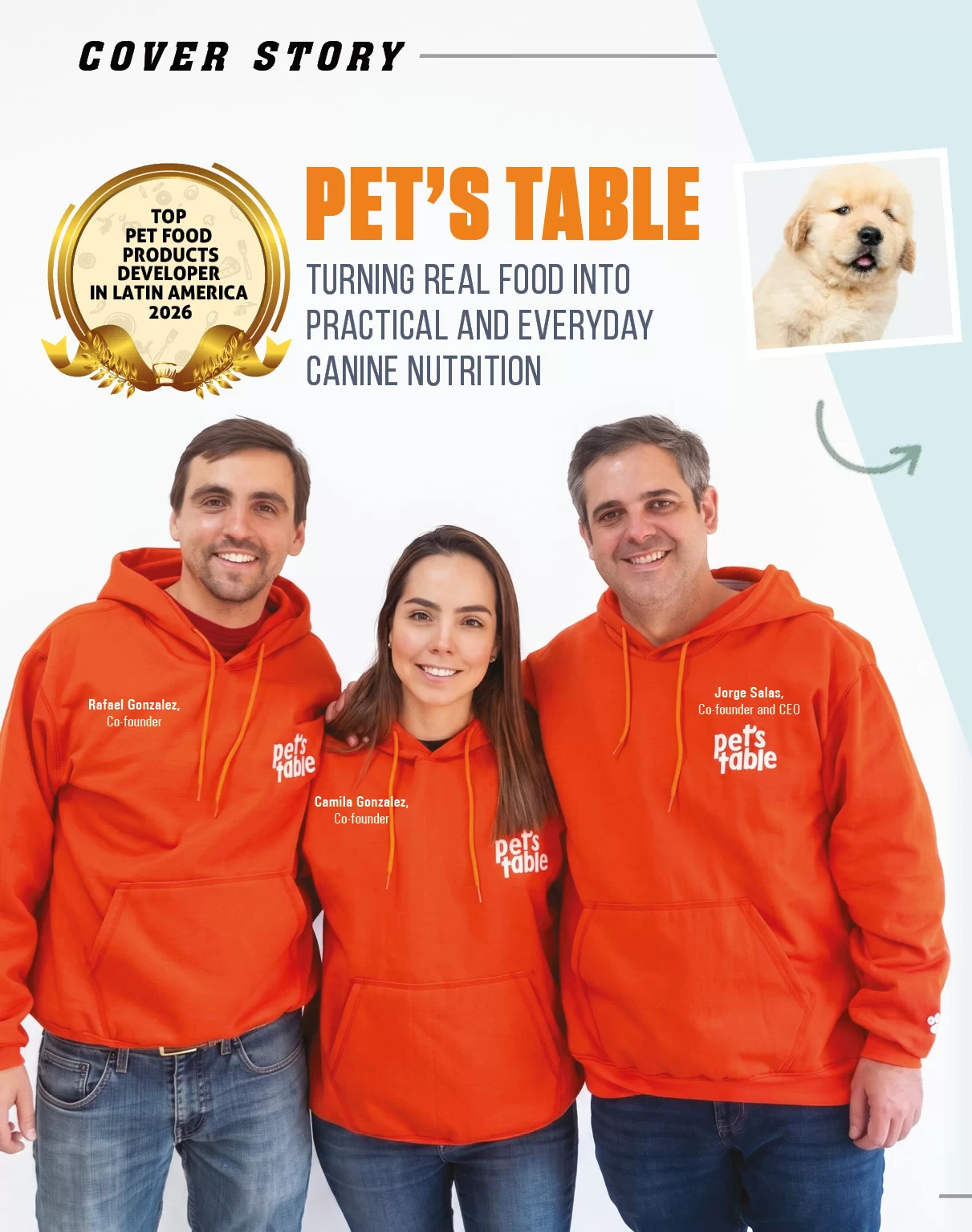
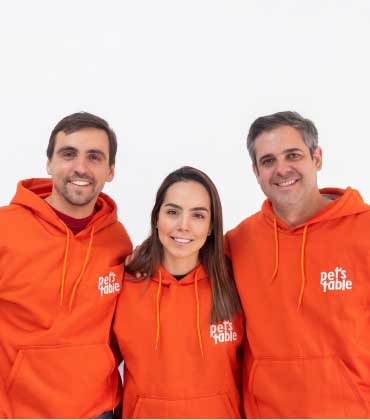 Rafael Gonzalez, Co-founder and Camila Gonzalez, Co-founder and Jorge Salas, Co-founder and CEO
What gap in pet nutrition led to the creation of fresh food alternatives?
“I remember standing in the pet food aisle looking for something I felt comfortable feeding my salt and pepper Schnauzer, Naomi and realizing everything on the shelf was ultra-processed kibble,” says Jorge Salas, co-founder and CEO of Pet’s Table. “That was the moment it hit me: dogs deserve real, wholesome food, held to the same quality standards as the meals we feed our families.”
This experience reflects a familiar tension for many dog owners in Mexico City. Pets are treated as family members, yet the food available to them has traditionally been shaped by convenience and shelf stability, made with artificial additives and excess carbohydrates rather than by freshness or ingredient transparency. Nutritionally balanced meals delivered fresh to the door did not exist at scale in the region.
Salas and his three co-founders, Luis Vollbracht, Camila Gonzalez and Rafael Gonzalez—all dog owners themselves—built what was missing. In 2020, working from a small kitchen in Mexico City, the team began developing meals made with 100 percent natural ingredients that owners could recognize at a glance and trust without having to decode labels. Each recipe was guided by a simple test, ‘Would we feed this to our own dogs?’
Five years later, that question has evolved into a scalable business model.
Pet’s Table now operates as a vertically integrated fresh pet-food company serving thousands of dogs across Mexico through a direct-to-consumer subscription platform, helping establish a category that had yet to gain meaningful traction in Latin America.
Operational Discipline Behind Consistent Freshness
How does production and supply chain control ensure consistent freshness and quality?
Pet’s Table’s core recipes, Meat Festival, Chicken Chase and Tasty Piggy, are developed by veterinary nutritionists and formulated to meet AAFCO and FEDIAF nutritional standards. Each balances clean protein, nutrient-rich organ meats like beef, chicken and pork, vegetables and essential fatty acids through a deliberately low-carb approach. No fillers, by-products, artificial colors or additives.
Production operates on a cook-to-order model aligned with delivery schedules. Ingredients come from TIF-certified local suppliers meeting the same food safety standards required for human-grade food production in Mexico. Meals are cooked at controlled temperatures to preserve nutritional integrity, then IQF-frozen immediately after packaging to lock in freshness. From there, the product moves into a zoned distribution network optimized for delivery frequency and quality control.
Pet’s Table invested early in its own manufacturing arm, production processes and cold-chain systems rather than outsourcing core capabilities. That operational foundation has become one of its strongest competitive advantages. Deliveries arrive frozen, on time, consistent batch after batch.
 “Quality does not fluctuate with growth. That kind of reliability may look unremarkable from the outside, but in a subscription business it functions as the most powerful retention tool we have,” says Camila Gonzalez, co-founder.
If a dog has a specific health condition that the current recipes are not designed to address, it turns that customer away rather than make a promise it cannot keep.
“We’d rather protect our integrity and the dog’s health than close a sale,” says Gonzalez.
The company also provides veterinary assistance to customers who need guidance beyond nutrition. Pet’s Table functions as a partner in each dog’s broader well-being, not strictly as a food provider.
Nutritional Balance in Everyday Bowls
Why is portion-based personalization used instead of fully customized pet food recipes?
Personalization at Pet’s Table means precise daily portions.
When a customer signs up, they complete a detailed profile covering breed, weight, age, activity level and body condition. An algorithm developed with input from veterinary nutritionists calculates the exact daily portion for that specific dog. It is not a generic feeding guide, but a precise nutritional plan.
Quality does not fluctuate with growth. That kind of reliability may look unremarkable from the outside, but in a subscription business it functions as the most powerful retention tool we have.
For the small percentage that need time to adjust, the team works closely with the owner to troubleshoot and adapt portion sizes and protein rotations as needed. Pet’s Table also provides veterinary assistance to customers who need guidance beyond nutrition, functioning as a partner in each dog’s broader wellbeing rather than strictly as a food provider.
This design reflects a deliberate principle. Some smaller brands attempt recipe-level customization. But most do not operate with the certifications, quality controls and production standards required to scale responsibly. Maintaining thousands of unique recipes would introduce regulatory complexity and compromise production consistency.
The deeper reason, however, is also accessibility.
“True recipe-level customization at scale would be prohibitively expensive,” says Gonzalez. “Our mission is to make more dogs healthier across Latin America, not to create a boutique product that only a handful of owners can afford.”
Transparency Around What Goes in the Bowl
How does ingredient transparency influence trust and decision-making for pet owners?
Pet food has long operated with limited visibility into sourcing and formulation. Pet’s Table removed that ambiguity.
Ingredient lists use plain language. Beef, chicken, pork, organ meats rich in zinc and iron, broccoli, sweet potato, spinach, carrots and fish oil for omega-3 fatty acids. Each component carries a defined nutritional purpose. Even the packaging and website make this information accessible and honest, without requiring a veterinary degree to understand.
Education follows the same logic. Articles on canine nutrition, comparisons between fresh meals and processed alternatives and guidance on what to look for—and what to avoid—in ingredient labels help pet owners make better decisions without relying on fear, jargon or marketing hype. The goal is not simply to sell a better product, but to create a better-informed customer.
The deeper reason, however, is ‘show, do not just tell.’
When pet owners open a Pet’s Table meal, they can immediately see that it is real food. The proteins are visible. The vegetables are recognizable. The ingredients look like something that could come from their own kitchen. In that moment, transparency stops being a claim on the package and becomes something far more convincing: proof in plain sight.
Service that Earns Weekly Trust
Fresh food captures attention, but sustained outcomes drive retention.
Pet’s Table builds multiple feedback loops into the customer journey. Onboarding surveys establish baseline data. Customer experience teams conduct periodic check-ins. Owners report on digestion, appetite, energy and coat quality.

One case involved a seven-year-old dog with chronic digestive issues, a dull coat and low energy after years on commercial kibble. The owner was skeptical but willing to try. Over the first few weeks, Pet’s Table monitored closely through check-ins and adjusted portion sizes twice based on the owner’s feedback. After roughly three months of consistent feeding, digestion stabilized, the coat improved noticeably and the dog regained a level of vitality the owner had not seen in years. That customer never left.
Internal surveys show 91 percent of dogs finish their meals enthusiastically. Over 90 percent of dogs take to the food immediately. 95 percent of customers report positive health changes. 90 percent of pet parents say they feel more at ease knowing exactly what their dog eats. Pet’s Table earns a Net Promoter Score of 89, with 98 percent rating the overall experience as good or excellent.
-
Feed your furry babies real, balanced food made with fresh ingredients, because every wag, wet nose and happy tail deserves a bowl filled with love and nutrition.
These numbers prove one thing: trust is not won through discounts. It is earned one interaction at a time. In subscription commerce, that trust must be renewed every week. Pet’s Table continues to earn it.
Growing Credibility with the Veterinary Community
Veterinarians in Mexico and across Latin America have historically defaulted to traditional diets that are familiar, widely studied and consistently available. Pet’s Table respects that position. But an organic shift is underway, driven by outcomes.
More veterinarians now recommend Pet’s Table after witnessing results firsthand in their patients. Many reach out directly. In the past, some fresh food attempts in the market lacked the quality controls and infrastructure to guarantee food safety, which made vets understandably cautious. Pet’s Table invites them to its manufacturing facility. Once they see the sourcing standards, production controls and packaging discipline, curiosity often turns into confidence. Many go on to recommend Pet’s Table to their clients.
Innovation through Discipline
Pet’s Table has been deliberate about expansion. Three core recipes have been refined over five years before broadening the range. That patience allows it to scale without compromising standards.
New development follows a pilot-to-scale process—small-batch testing, controlled customer feedback, locked specifications and, only then, a broad rollout. Pet’s Table does not rush. Getting it right matters more than getting it first.
Recent launches include freeze-dried treats, a shelf-stable, convenient option for training, travel or everyday rewards. Development is underway on food for cats, a natural extension of the mission into a category where the same gap exists. The team is also developing recipes tailored to specific health conditions, allowing Pet’s Table to serve dogs it currently has to turn away.
On the technology side, Pet’s Table is piloting AI-driven tools that analyze feeding and health data to suggest adjustments before problems become visible to the owner. That proactive model represents the next stage of the service relationship. Evaluating every new technology and production method against a single filter is mandatory. Is this genuinely better for the dogs? If the answer is yes, it moves forward. If the innovation exists for its own sake, it passes.
“Customers pay for quality when the value is real and transparent. The infrastructure and processes we built are designed to support expansion across the continent. Complementary product formats are in development to reach markets where direct frozen delivery is not yet feasible,” says Salas.
Pet’s Table aims to prove that Latin America can build a world-class pet nutrition company from within, rooted in regional realities.
Thousands of dogs across Mexico now eat meals formulated by its veterinary nutrition team, sourced from human-grade supply chains, portioned precisely and delivered on a subscription basis.
Food Business Review’s recognition of Pet’s Table as Top Pet Food Products Developer 2026 reflects the care, transparency and execution behind a real food-feeding model built to make better canine nutrition practical for families across Mexico.
To sum up the company’s ethos in Salas’ own words, “Feed your furry babies real, balanced food made with fresh ingredients, because every wag, wet nose and happy tail deserves a bowl filled with love and nutrition.”
Evaluating the Next Generation of Fresh Pet Food Development
The global pet nutrition market is undergoing a structural shift as dog owners increasingly question the long-standing reliance on highly processed kibble. Across Latin America in particular, rising pet ownership and the growing perception of pets as family members have changed expectations about what constitutes acceptable nutrition. Executives responsible for sourcing and developing advanced pet food products face a complex mandate: delivering higher ingredient transparency, maintaining nutritional consistency and building supply systems capable of supporting fresh formulations at scale.
Processed products dominated the industry for decades largely because they were easy to manufacture, shelf stable and simple to distribute. That legacy model still shapes many procurement and product development decisions today. Yet changing consumer attitudes have exposed weaknesses in that approach. Pet owners increasingly scrutinize ingredient labels, looking for identifiable proteins, natural produce and the absence of artificial additives or by-products. Trust in a brand now depends not only on nutritional claims but also on clarity about sourcing, preparation and the reasoning behind ingredient choices.
Product developers therefore confront a balancing act between nutritional integrity and production discipline. Recipes must be formulated by qualified nutrition professionals while remaining practical to manufacture consistently. In many modern models, personalization is achieved through feeding plans rather than through continuous reformulation of recipes. Pet diets also cannot remain static; dogs’ needs shift with age, activity level and health conditions. Systems that allow feeding portions or plans to adjust as those conditions change help maintain nutritional consistency without introducing operational complexity.
Fresh food production introduces another layer of complexity. Unlike traditional shelf-stable formats, fresh meals require precise cooking processes, strict food safety controls and a reliable cold chain. Companies that treat manufacturing infrastructure as a strategic capability rather than a logistical afterthought gain a meaningful advantage. Ingredient sourcing must meet high standards and preparation timelines must align closely with delivery schedules so freshness does not come at the expense of safety or consistency.
Customer insight has also become a decisive influence in modern product development. Continuous feedback from pet owners—ranging from appetite and digestion to coat quality and energy levels—provides a real-world signal about how formulations perform over time. Organizations that build structured feedback loops into their product lifecycle gain the ability to refine feeding plans, adjust portions or recommend recipe rotations as needs evolve. Such responsiveness strengthens retention in subscription-driven models where trust must be reinforced week after week.
Transparency now plays a defining role in market differentiation. Ingredient lists written in plain language, clear explanations of nutritional rationale and educational resources about pet diets help demystify a category that historically lacked visibility. Buyers evaluating potential partners often favor developers that combine nutritional clarity with disciplined manufacturing processes and traceable ingredient sourcing.
Pet’s Table exemplifies many of these attributes in the Latin American market. Founded in Mexico in 2020, the company focuses on fresh dog meals formulated by veterinary nutritionists and built around recognizable ingredients such as beef, chicken, pork, vegetables and nutrient-rich organ meats. Its model combines standardized recipes with portion-level personalization calculated from each dog’s profile, including breed, weight, age, activity level and body condition.
Production follows a cook-to-order system aligned with delivery schedules. Meals are cooked under controlled conditions, individually quick frozen (IQF) after packaging to preserve nutritional integrity and distributed through a zoned delivery network designed to maintain cold-chain consistency. Ingredient sourcing follows food-grade standards through certified suppliers, while the company’s vertically integrated production infrastructure supports consistent quality as demand grows.
Close interaction with pet owners allows feeding plans to be adjusted when needed, often with direct veterinary involvement. Ongoing customer feedback, combined with veterinary oversight, informs portion adjustments and feeding guidance as dogs’ needs evolve. This combination of nutritional rigor, disciplined production and continuous customer feedback positions Pet’s Table as a leading developer of fresh pet food products for organizations evaluating advanced nutrition solutions in Latin America.
...Read more
Company :
Pet’s Table
Management Rafael Gonzalez, Co-founder and Camila Gonzalez, Co-founder and Jorge Salas, Co-founder and CEO
Description
Pet’s Table is reshaping pet nutrition in Mexico with fresh, human-grade meals, precise portioning and disciplined cold-chain delivery. Built on transparency, veterinary guidance and operational rigor, Pet’s Table helps families feed their dogs with greater trust, care and everyday confidence.