
Thank you for Subscribing to Food Business Review Weekly Brief


In foodservice, artfully mastering quality bread is just the beginning. Operators and distributors benefit from a partner that can adapt their products to specific operational requirements, deliver consistency, and scale alongside them without compromising quality and customer experience.
Max’s Bakery has been navigating that intersection for nearly three decades, working with clients to develop high-quality bread solutions built around their specific operational demands.
“We’re really focused on understanding what the client is trying to achieve and helping them get there,” says Max Stanley, VP of Business Strategy and Development.
 Max’s Bakery makes the development process seamless. Product development is shaped by operator requirements around flavor profile, texture, structure, shelf life, and handling characteristics. Products are then refined collaboratively through testing and feedback to align formulations with both operational realities and customer expectations.
Today, the cycle has evolved into a structured feedback loop that informs ongoing product refinement. Insights from operators across different restaurant formats help Max’s Bakery anticipate performance challenges early and adapt products to varied operational environments.
From its modest beginnings in a 300-square-foot warehouse, producing a single product, Max’s Bakery has grown into a more than 75,000-square-foot facility with a catalog of over 100 offerings. Sustained investments in hiring and retaining talent and a commitment to maintaining high-quality standards have driven this massive growth.
After nearly three successful decades in foodservice, it is venturing into the retail space.
“We’ve always been conscious about not biting off more than we can chew and ensuring we don’t sacrifice quality in the name of quantity,” says Stanley.
Breads Crafted for Performance and Flavor
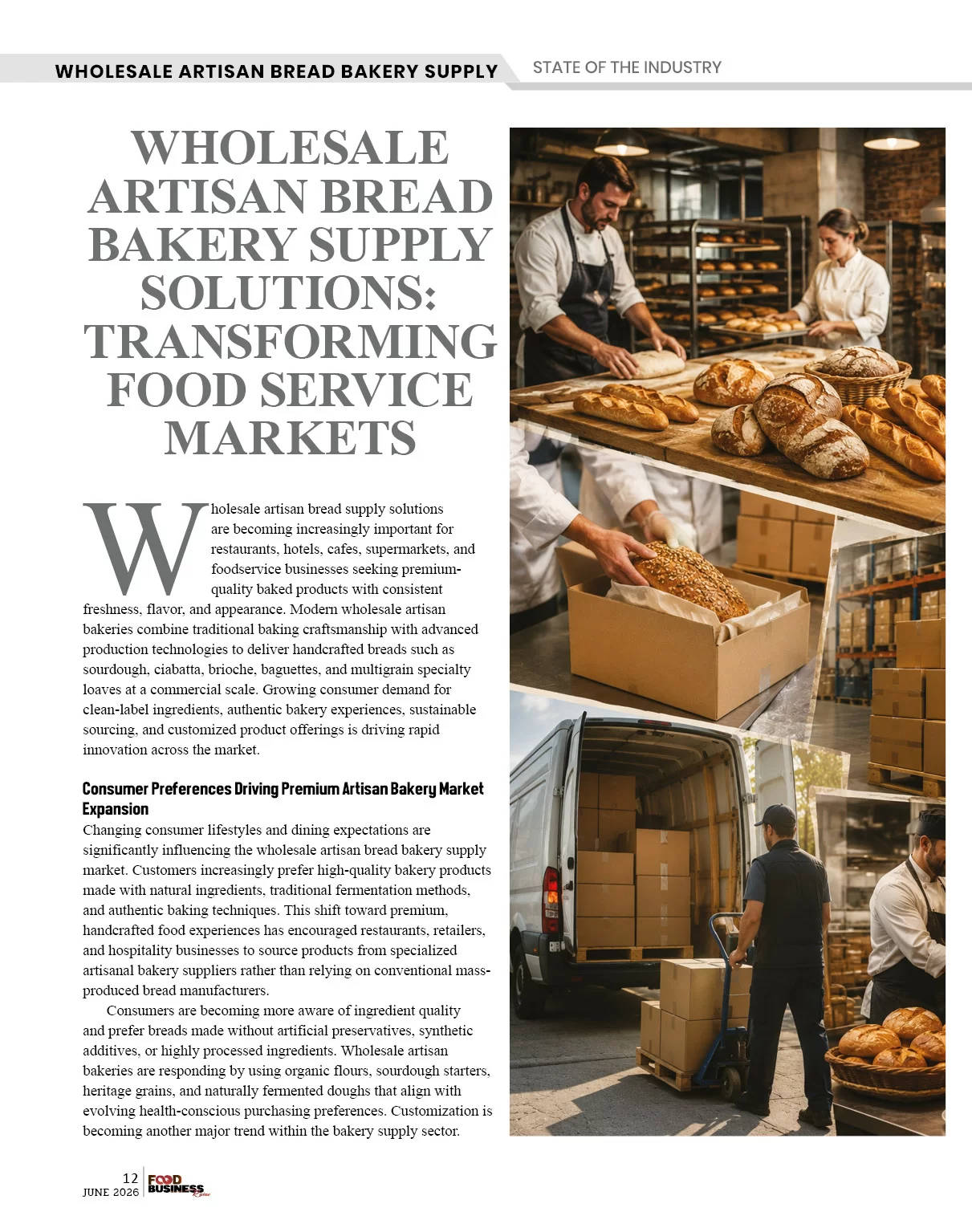
 Max’s Bakery focuses exclusively on bread, supplying sliced loaves, burger buns, hoagie rolls, dinner rolls and a growing range of specialty items. At the core of the portfolio are sandwich rolls and burger buns, including the flagship seven-inch line designed as a plug-and-play for delis and sandwich shops. The line offers consistent sizing and case packs across key varieties, including sourdough, white, wheat and its specialty, Dutch Crunch. While the seven-inch line may be the bestseller, the collection also includes 12-inch offerings and newly launched 5-inch versions in all four flavors.
The five-inch line addresses changing pricing dynamics in the market, allowing operators to balance portion size with price sensitivity, particularly within lunch-focused concepts.
As the broader market becomes crowded with specialty bread offerings, Max’s Bakery’s model has expanded to address factors beyond flavor. Durability, for instance, has become a key consideration. Products are designed to hold up through the entire eating experience, particularly when sauces or high moisture are involved.
We’re really focused on understanding what the client is trying to achieve and helping them get there.
Scaling Alongside Customer Growth
Max’s Bakery works with foodservice businesses at different stages of growth, from single-location concepts to large chains. At larger scales, reliable performance across locations and formats becomes critical.
In one instance, a distributor pursuing a chain with more than 100 locations came with a specific brief; four core bread items, each with defined specifications, produced consistently to perform to the same standard across every location.
From the beginning, collaboration shaped every step of the process. Max’s Bakery developed samples, worked through multiple rounds of testing, and refined the products based on direct feedback from the customer. Each iteration focused on how the bread performed in real conditions, from assembly through service. Once finalized, the products were rolled out across all locations, enabling the distributor to secure the account. The relationship has continued for more than a decade, reflecting the long-term value of Max’s Bakery’s development process.
-
We’ve always been conscious about not biting off more than we can chew and ensuring we don’t sacrifice quality in the name of quantity.
For smaller operators and distributors, the starting point is often different. Many begin by partnering with local bakeries and building their menus around what is readily available. As they expand, that sourcing model becomes harder to sustain. Capacity becomes limited, distribution becomes inconsistent, and maintaining a uniform product experience across locations becomes difficult.
This is approached by reworking the product rather than replicating it. The conversation is centered on what the operator is currently using—what works, what does not, and what they would change if they could. That input becomes the basis for development that enables operators to transition to a solution that better aligns with their evolving needs.
Simplifying Collaboration
Equal importance is placed on the experiences of the operators and distributors who work with Max’s Bakery daily.
 A key part of this is responsiveness. When a distribution rep or operator reaches out with a need, the response is based on the application. Instead of sending a single option, it identifies multiple relevant products and ships samples quickly, often reaching the customer the next day. They test products in their kitchens and make decisions based on actual performance.
Teams across sales and customer relations bring firsthand experience in restaurant operations to assess requirements and promptly recommend the right solutions.
When a problem surfaces, they work closely with operators to pin down the root cause. Performance within kitchens is often shaped by factors like storage, handling and preparation. Variables like proximity to heat sources, inventory rotation or assembly methods can also influence outcomes. Assessing these conditions facilitates the necessary product adjustments.
The consultative approach extends to how business is structured. With a catalog of over 100 products, Max’s Bakery looks at a customer’s requirements across the board rather than item by item. Operators sourcing multiple products can consolidate supply, with agreements built around total volume instead of individual SKUs. This makes account management easier for distributors and reps while helping operators maintain consistency across locations, keeping the overall experience of working with Max’s Bakery straightforward and reliable.
Going Retail
After building a loyal following in foodservice, Dutch Crunch is stepping into the retail spotlight with its own dedicated brand, Max’s Dutch Crunch. Years of demand from operators—and shoppers eager to bring it home—have fueled the expansion.
 Moving into retail required reworking the product for a different environment. Bread designed for kitchens does not automatically adapt to store shelves. Shelf life, durability, ingredient expectations and pack sizes all needed to be reconsidered for a consumer setting.
The transition also introduced new considerations around ingredient selection and labeling, particularly because retail environments place greater emphasis on clean-label formulations. Addressing those requirements required additional research and development alongside adjustments to packaging and distribution.
Rather than rushing the process, the team embraced iteration—testing, refining, and perfecting each detail along the way until the product met retail requirements without compromising what made it successful in the first place.
“We went through multiple rounds of testing and reformulation to get it right. The goal was to improve shelf life and durability for retail while keeping the same product experience we’re known for,” says Stanley.
The move also aligns with broader category shifts. Consumers are increasingly trading up for better quality and more distinctive bread offerings. Entry into the retail space is not just a scale-up; it is a strategic move designed around products that already meet those expectations.
Growth at Max’s Bakery continues to follow the same principle that shaped its early years; take on only what the business can support and execute it well. Expansion into retail is progressing alongside existing foodservice operations, with capacity, systems and partnerships aligned with expected demand. Existing operators remain central to the business, even as new channels open.
In an industry where product alone is rarely enough, Max’s Bakery builds its reputation on qualities that are enduring: consistency, reliability, and a true partnership mindset. Recognized as California’s Top Wholesale Artisan Bread Bakery Supply Solutions provider, Max’s Bakery has become the trusted name behind operators and distributors looking to grow, innovate, and keep customers coming back for more.
Balancing Craft and Scale In Wholesale Artisan Bread Supply
Food service operators face a persistent tension between maintaining product distinctiveness and achieving the consistency required for multi-location growth. Bread, often treated as a supporting element, increasingly shapes customer perception, menu pricing and repeat behavior. Variability in texture, shelf life or portioning can disrupt kitchen flow and erode brand trust, especially as operators expand across regions and rely on distributor networks. Many traditional local bakeries deliver craftsmanship but struggle to scale, while large industrial suppliers offer uniformity at the expense of character.
"Max’s Bakery bridges artisan quality and large scale production, giving food brands consistent bread that works across every location."
This gap has sharpened expectations around how wholesale bread partners perform. Buyers now gravitate toward suppliers that can translate artisan quality into repeatable output without introducing operational friction. Consistency across locations is not simply a production challenge but a distribution and specification challenge, where identical sizing, packaging and performance must hold across varied kitchen environments. A reliable supplier demonstrates the ability to match exact product requirements while maintaining the same eating experience, whether serving a single unit or a national chain.
Adaptability has become equally central. Operators rarely benefit from off-the-shelf products alone; they require breads that align with menu concepts, pricing targets and preparation methods. A supplier that works iteratively with operators, incorporating feedback from kitchen teams and end customers, enables a tighter alignment between product and concept. This collaborative development process shortens the distance between idea and execution, ensuring that new items enter menus with confidence rather than compromise.
Ease of partnership often determines long-term value. Procurement teams and distributor representatives favor suppliers that simplify decision-making, respond quickly with relevant samples and understand the realities of food service environments. Practical knowledge of kitchen workflows, portion control and menu engineering allows a supplier to recommend products that fit naturally into existing operations. This reduces trial-and-error cycles and supports faster rollout across locations, particularly for operators transitioning from single-unit setups to broader footprints.
“Consistency across locations is not simply a production challenge but a distribution and specification challenge, where identical sizing, packaging and performance must hold across varied kitchen environments.”
Product range also plays a strategic role. Bread programs that cover core formats such as burger buns, sandwich rolls and specialty items within standardized sizing frameworks help operators streamline sourcing. Consistent case packs and interchangeable formats reduce complexity in ordering and inventory management, while still allowing menu variation. This balance between breadth and standardization supports both efficiency and creativity at the operator level, especially in concepts that depend on speed, uniform presentation and predictable portioning, while maintaining flexibility for evolving menu strategies and pricing models.
In this context, Max’s Bakery stands out as a supplier that aligns closely with these expectations. It has built its offering around collaborative product development, working directly with operators to create breads that meet precise specifications while improving on existing solutions. Its catalog, developed steadily over decades, reflects a disciplined approach to scaling without compromising quality, enabling it to support both emerging operators and established chains.
The company’s structured product lines, including standardized sandwich and specialty offerings, simplify procurement while maintaining distinctiveness. Its responsiveness, informed by deep familiarity with restaurant operations, allows it to move quickly from sampling to rollout. This combination of consistency, adaptability and ease of engagement positions it as a dependable partner for operators seeking to elevate bread programs while maintaining control over cost, quality and customer experience across diverse operating environments.
...Read more
Specialty Coffee Roasters Info
Q1
What Should Buyers Expect from Wholesale Artisan Bread Bakery Supply Solutions?
Wholesale Artisan Bread Bakery Supply Solutions should combine craft-style bread quality with the consistency needed for foodservice scale. Buyers should look for dependable sizing, case-pack discipline, shelf stability, flavor variety and products that perform well during storage, assembly and service. A good supplier also understands that bread has to fit the menu, not complicate it.
Q2
How Does Max’s Bakery Support Bread Programs at Scale?
Max’s Bakery brings Wholesale Artisan Bread Bakery Supply Solutions through nearly three decades of bakery work, a 75,000-square-foot-plus facility and a catalog of more than 100 bread products. Its range includes sliced loaves, burger buns, hoagie rolls, dinner rolls and specialty items for operators that need both variety and repeatable supply.
Q3
Why Do Product Specifications Matter in Bakery Supply?
Small differences in bread size, texture or durability can affect portion control, menu pricing and customer experience. Wholesale Artisan Bread Bakery Supply Solutions help operators keep products consistent across locations while still supporting distinct menu ideas and specialty bread expectations. Clear specifications also reduce last-minute substitution problems.
Q4
How Can Artisan Bread Reduce Waste and Kitchen Friction?
Bread that breaks down too quickly can create waste, rushed reorders and uneven service. Wholesale Artisan Bread Bakery Supply Solutions address this through better shelf stability, handling strength and room-temperature freshness, especially when sauces, moisture or longer holding times are part of the menu. That matters during busy service windows.
Q5
What Makes Max’s Bakery’s Development Process Useful for Operators?
Max’s Bakery builds Wholesale Artisan Bread Bakery Supply Solutions around customer requirements such as flavor profile, texture, structure, shelf life and handling. Its team refines products through testing, sends relevant samples quickly and studies kitchen factors such as storage, heat exposure, inventory rotation and assembly methods. This keeps product development tied to how bread is actually used.
Q6
How Should Buyers Evaluate a Wholesale Bread Partner?
Buyers should test Wholesale Artisan Bread Bakery Supply Solutions in real kitchen conditions, not only in samples or spec sheets. Check how the bread holds fillings, travels through distribution, fits packaging, supports inventory planning and performs across repeated service periods. Reliable bakery supply should make purchasing easier while protecting the final plate.
Company :
Max’s Bakery
Management Max Stanley, VP of Business and Development
Description
Max’s Bakery is a wholesale foodservice partner supplying custom solutions to operators and distributors. Focused exclusively on bread, it develops products based on operator requirements, delivering consistent quality, scalable production and a streamlined customer experience across a catalog of over 100 offerings.