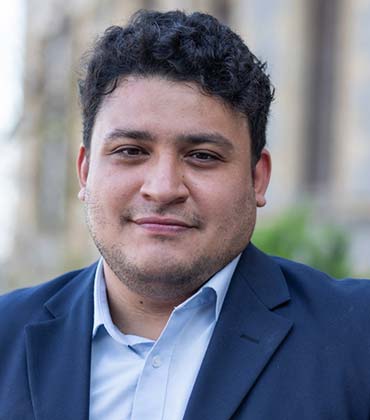
Dante Betancourt
What Shaped Me: Responsibility, People and Stewardship
The experiences that have most shaped me come from hard work and the sense of responsibility instilled by my mentors. They taught me to care deeply about people, one of the most important values we can hold.
Leading a quality department, I often received emails and comments from customers praising our products. Those moments were meaningful, but some stood out more than others. While working at an infant formula company, for example, several customers reached out to thank us because our formula helped their babies grow after they had struggled with other options, experiences like these push you to truly understand the impact of what you do every day. Equally important is caring for the environment, the place we live and the world we will leave for our children. Today, many in my generation can clearly see the changes in our climate. Having the opportunity to contribute in a way that positively impacts both people and the environment—our flora and fauna—is deeply important to me. ,
Ultimately, it is about what we leave behind for future generations, starting with our own families.
Today’s Biggest Challenge: Culture, Engagement and Ownership
I believe the greatest challenge we face today (and have faced for many years) is building and sustaining a strong culture of quality and food safety within organizations. This responsibility spans every level, from senior leadership to frontline employees.
The most effective way to ensure food safety and product quality is by fostering genuine engagement within teams. Involving people in the process and helping them understand the positive impact of their work makes a significant difference.
Throughout my experience in the food industry, I have seen that the most effective way to ensure food safety and product quality is by fostering genuine engagement within teams. Involving people in the process and helping them understand the positive impact of their work makes a significant difference. To me, this approach is essential for becoming a truly great company—one that upholds high quality standards while also creating a workplace where people feel valued and motivated.
Finding Balance: Teamwork, Awareness and Practical Change
True balance comes from the commitment of a team. On my own, I cannot achieve much, but when people are engaged and aligned, we can accomplish great things. Demonstrating the benefits of sustainable practices is a powerful driver of change. From an economic perspective, initiatives such as installing solar panels are clearly attractive. However, it is equally important for everyone in the organization to understand and care about how we use energy, water and manage waste. This awareness must be connected to the world we are leaving for our children—the quality of the air we breathe and the increasingly extreme weather we are experiencing. Ultimately, meaningful change depends on people’s willingness to act. In my case, fostering that mindset is something I strive to promote within my team every day.
What I’m Seeing: AI, Electrification and Reuse
Many companies today provide strong examples of how to drive change by developing new processes that improve efficiency and reduce emissions. Some have already transitioned their vehicle fleets to electric models and invested in renewable energy solutions such as solar power. While the shift from fossil fuels to electricity is no longer a new concept, it remains one of the most impactful strategies for protecting the environment—while also delivering significant economic benefits for businesses. At the same time, emerging technologies like artificial intelligence are beginning to play a key role. AI can support waste management through better sorting and selection processes, enhance operational efficiency by minimizing human error and reduce the risk of contamination by limiting manual handling. These advancements also contribute to lowering food waste and reduce risk of any contamination across the value chain. For me, one of the most important priorities in 2026 is the use of recycled materials. Although this is not a new approach, it continues to offer a powerful opportunity to create meaningful impact across the entire supply chain.
My Advice: Learn Deeply, Stay Grounded, Care
I would like to advise learning about processes and being on the floor of the company to understand the reality of the situations that happen every day (nothing can be solved by only sitting in an office). However, the best advice I can give is to be passionate. The impact of both areas is truly significant and in our hands lies the decision to improve and to help others improve as well. We can make a difference for the people in our communities—not only by providing safe food, but also by contributing to better conditions for our national parks, our rivers and the air we breathe. This is the legacy we can create, so be passionate and the impact you make will be reflected for years to come.