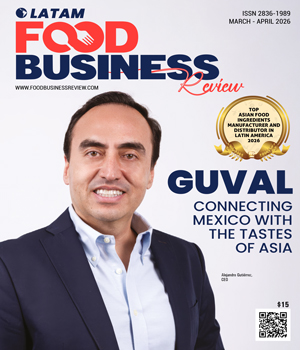

Thank you for Subscribing to Food Business Review Weekly Brief


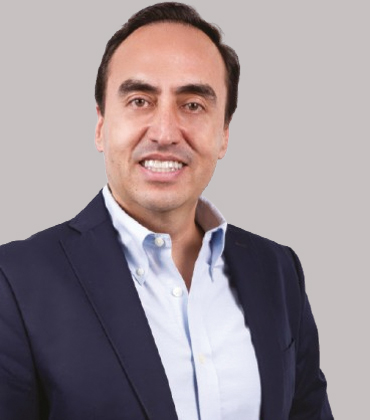 Alejandro Gutiérrez, CEO
Guval has emerged as Mexico’s leading manufacturer-integrated importer and distributor of Asian food ingredients, transforming how chefs, retailers, and home cooks access authentic, locally adapted Asian cuisine. Through partnerships with major supermarkets, restaurant chains, and direct collaboration with Asian producers, the company has built a national-scale distribution and manufacturing platform that connects Asia’s most iconic food brands with the Mexican market.
This leadership, however, has its roots in a far humbler origin.
In the early 2000s, when Japanese cuisine was just starting to gain traction in Mexico, genuine ingredients remained elusive. Alejandro Gutiérrez, then working at a Japanese multinational in Mexico City, was approached by a friend to source rice and nori (seaweed), for local restaurants. With limited supply options, he turned to small shops run by Japanese residents and began buying from them, supplying restaurants desperate for quality and consistency.
Demand soon formalized the effort. In 2004, he established Guval, inviting his father and brother to create a family enterprise dedicated to making Asian cuisine accessible, educational, and operationally viable at scale for the Mexican market.
“At the beginning, we were no more than 10 people. Today, we are a team of more than 200,” says Gutiérrez, CEO.
From Foodservice Roots to Retail Manufacturing Scale
In its first phase, Guval operated primarily as a foodservice-focused supplier. Around 70 percent of the company’s business came from restaurants, with the balance split between hotels, cafeterias, and a growing retail footprint. The portfolio centered on Japanese staples, including rice, seaweed, sauces, and seasonings, targeting professional kitchens that were early adopters of Asian cuisine. As Guval’s network expanded beyond Japanese restaurants to other concepts incorporating Asian flavors, the company reinforced its positioning as a specialist partner, not just a generic importer.
We initially set out to make sushi preparation easier, but quickly realized it was also enabling a shared family ritual that resonated strongly with Mexican consumers.
What followed was a strategic shift. Rather than remaining a bulk supplier, Guval repositioned its business toward consumer-friendly packaging designed for at-home consumption. Through its proprietary brands Satoru®, Morimoto®, and HIDE®, the company introduced a curated portfolio of essential Japanese food ingredients including rice, nori, panko, sauces, and other core pantry staples transforming professional-grade imports into accessible, retail-ready formats tailored for supermarket shelves and everyday household use.
Over time, the business mix inverted. A company that had once generated most of its revenue from restaurants now draws about 80 percent from retail and 20 percent from foodservice and HORECA. This rebalancing firmly positioned Guval as a retail-led brand builder with deep foodservice credibility, rather than just a trade intermediary.
Sushi Kits and the #SushiExperience
 As Guval’s retail presence expanded, consumer demand shifted from ingredients alone to complete culinary guidance. Social media inquiries revealed widespread unfamiliarity with techniques and uncertainty surrounding basics, such as sticky rice handling. Customers had a straightforward question: How to make sushi that feels restaurant-quality?
In response, Guval developed one of its most successful innovations, sushi kits. Rather than simply bundling existing SKUs, it rethought the user experience end-to-end, designing kits that would lower barriers for first-time sushi makers while delivering authentic flavor and texture. The company also identified rice preparation as the core friction point and addressed it by producing 100 percent fully cooked rice in its own facilities, enabling consistent quality and ease of use. What began as a functional solution evolved into a shared experience. Families began posting their sushi-making moments online, prompting Guval to formalize the concept under the #SushiExperience.
“We initially set out to make sushi preparation easier, but quickly realized it was also enabling a shared family ritual that resonated strongly with Mexican consumers,” states Gutiérrez.
Color, Health, and Category Innovation
Guval’s innovation strategy extends beyond convenience into cultural adaptation and health-conscious design. Inspired by traditional Japanese bento, the company developed its seven-color sushi rice line to encourage healthier, more engaging meals for children.
Produced and adapted locally, the concept resonated far beyond its original audience. Adults, too, embraced the product for its creativity, while major restaurant chains leveraged it to differentiate their seasonal menus. One of Mexico’s leading sushi chains adopted the product for limited-edition offerings, reinforcing its versatility as a manufactured ingredient platform rather than a novelty SKU.
 The innovation gained international recognition. Guval was invited to participate in Shark Tank Mexico’s innovation program, while a Japanese television crew highlighted the product as a rare example of Asian culinary concepts being meaningfully reinterpreted abroad.
Strategic Asian Partnerships and Distribution Leadership
Behind its consumer-facing brands, Guval operates a fully integrated B2B Asian sourcing, manufacturing, and distribution engine connecting producers from Japan, Korea, Thailand, and other Asian markets with more than 3,000 points of sale across Mexico.
Many Asian manufacturers initially attempted to enter the market through distributors of their own nationality, only to discover that long-term growth required local manufacturing adaptation, regulatory understanding, and effective retail execution. Guval filled that gap, offering partners a model that blends Asian authenticity with Mexican market intelligence.
Today, Guval represents a diverse portfolio of Asian brands, including four of South Korea’s leading ramen manufacturers, as well as beverages and specialty ingredients from Thailand and beyond. Rather than relying on exclusivity, the company differentiates itself through effective sales execution, category management, and localized manufacturing capabilities, enabling partners to scale sustainably.
A Scalable Model for Asia–Latin America Growth
Looking ahead, Guval continues to collaborate directly with Asian producers to localize flavors and formats for Mexican consumers, including the co-development of ramen profiles tailored to regional taste preferences. While its strategy remains agile rather than fixed, its mission remains consistent: to serve as a long-term bridge for manufacturing and distribution between Asia and Latin America.
From a single request for rice and seaweed to its position today as Mexico’s leading platform for Asian food ingredients, Guval exemplifies how cultural fluency, manufacturing control, and distribution scale can redefine how Asian cuisine travels across borders.
Scaling Authenticity: Choosing the Right Asian Food Ingredients Partner in Mexico
The rapid normalization of Asian cuisine within Mexico’s mainstream retail environment has reshaped procurement priorities across food distribution. What began as a restaurant-driven niche anchored in Japanese dining has expanded into supermarket sushi counters, Korean flavor trends and at-home experimentation. Executives responsible for sourcing Asian food ingredients now face a more complex mandate: secure authenticity, ensure commercial scalability and cultivate consumer adoption within a competitive retail landscape.
Sustained category growth depends on a supplier’s ability to localize without diluting culinary integrity. Importing bulk commodities alone does not create retail momentum. Mexican consumers entering the segment often require guidance, format adaptation and price accessibility before repeat purchase behavior stabilizes. A manufacturing and distribution partner must understand how ingredients move from foodservice kitchens into packaged retail formats, and how those formats translate into household usage. Repackaging, private label development and format optimization are not ancillary services; they are central to category expansion. Buyers should assess whether a supplier demonstrates fluency in domestic retail dynamics rather than relying solely on overseas sourcing credentials.
Innovation capacity further differentiates credible partners from transactional importers. Asian cuisine presents preparation variables unfamiliar to many households, from rice texture management to seasoning balance. Suppliers that invest in simplifying these steps contribute directly to velocity at shelf. Product development grounded in real consumer friction points signals long-term viability. Meal kits, ready-to-heat components and culturally adapted variants can convert curiosity into habitual consumption. The most effective partners show evidence of iterative product refinement informed by retailer feedback, social engagement and foodservice insights. That feedback loop reflects disciplined market listening rather than speculative expansion.
Distribution reach and channel integration complete the evaluation framework. National retailers expect reliability, regulatory compliance and category stewardship. International brands entering Mexico expect representation capable of accelerating penetration while preserving brand standards. A qualified partner should demonstrate established relationships across major supermarket chains, warehouse clubs and specialty retailers while maintaining selective foodservice coverage. Breadth of the portfolio must be managed carefully to avoid channel conflict. Executives should examine point-of-sale penetration, exclusive representation agreements and participation in international trade exhibitions that indicate trend awareness and sourcing continuity.
Mexico’s Asian food ingredients market has matured to a point where strategic alignment outweighs opportunistic importing. Suppliers that have grown alongside the category often possess deeper insight into how retail buyers think, how consumers adopt new cuisines and how product formats evolve over time. Longevity in the segment tends to correlate with stronger retail credibility and more disciplined portfolio management.
Guval reflects this trajectory. Established in Mexico City more than two decades ago, it began by supplying Japanese restaurants during the early expansion of sushi in the country. Its evolution toward retail manufacturing and brand ownership mirrors the broader shift from foodservice reliance to household adoption. It develops proprietary brands such as Santo and Morimoto, repackaging staple ingredients into consumer-ready formats and designing solutions tailored to Mexican shoppers. Its portfolio includes complete sushi kits, onigiri kits and fully cooked rice formats that simplify preparation, alongside distinctive offerings such as seven-color sushi rice adapted for both families and restaurant chains.
Its distribution network spans thousands of retail points of sale and includes partnerships with leading national chains. It also represents established brands from Japan, Korea and Thailand while maintaining local manufacturing capability. For executives evaluating Asian food ingredients partners in Mexico, Guval presents a balanced combination of authentic sourcing, localized innovation and disciplined retail execution.
...Read more
Asian Food Ingredients Manufacturer and Distributor Info
Q1
Why is Guval Foods considered among top Asian food ingredients manufacturer and distributor companies?
Guval Foods is considered among top Asian food ingredients manufacturer and distributor companies because it has built a manufacturer integrated sourcing, production and distribution platform focused on bringing Asian cuisine to the Mexican market at scale. The company was recognized by Food Business Review as the “Top Asian Food Ingredients Manufacturer and Distributor in Latin America 2026” for its ability to combine authentic Asian sourcing with localized manufacturing and national retail distribution.
Q2
How does Guval Foods differentiate its approach as an Asian food ingredients manufacturer and distributor?
A localization focused Asian food strategy defines its approach. Guval Foods works directly with producers from Japan, Korea, Thailand and other Asian markets while adapting products and packaging for Mexican consumers and retail channels. Its Asian food ingredients manufacturer and distributor model combines import operations, local manufacturing and proprietary brands such as Satoru®, Morimoto® and HIDE® to support both foodservice and retail markets.
Q3
How does the company support restaurants, retailers and foodservice businesses?
Integrated distribution and category support shape its operating model. Guval Foods supplies Asian food ingredients to hotels, restaurants, supermarkets and foodservice operators across Mexico through a nationwide distribution network covering thousands of points of sale. Its Asian food ingredients manufacturer and distributor capabilities include sushi ingredients, sauces, ramen, rice, seaweed, panko and ready-to-prepare Asian meal solutions tailored for commercial and household use.
Q4
What value does Guval Foods’ Asian food ingredients manufacturer and distributor model deliver?
Authenticity, accessibility and retail scalability define the value delivered. Guval Foods helps make Asian cuisine easier to prepare and more accessible for Mexican consumers through locally adapted product formats and retail ready packaging. Its Asian food ingredients manufacturer and distributor strategy also supports international Asian brands entering Mexico by providing market expertise, regulatory alignment and localized commercialization support.
Q5
What role do innovation and manufacturing play in Guval Foods’ operations?
Product innovation and manufacturing adaptation are central to its operations. Guval Foods develops products such as sushi kits, cooked rice formats and regionally adapted ramen profiles designed around Mexican consumer preferences and ease of preparation. Its Asian food ingredients manufacturer and distributor framework also includes collaboration with Asian producers to co-develop flavors and product concepts specifically for Latin American markets.
Q6
Why is Guval Foods relevant in today’s food industry?
Demand for Asian cuisine continues to grow across retail, restaurant and home consumption channels throughout Latin America. Guval Foods addresses this demand through an Asian food ingredients manufacturer and distributor model that combines international sourcing, localized manufacturing and national scale distribution. Its ability to bridge Asian producers with Latin American consumers positions the company within a rapidly expanding global Asian food market.
Company :
Guval
Management Alejandro Gutiérrez, CEO
Description
Guval is a Mexico-based family enterprise founded by Alejandro Gutiérrez in 2004, dedicated to making Asian cuisine accessible across the country. Evolving from a small distributor into a leading category developer, Guval offers authentic ingredients, innovative products, and culinary education that connect Mexican consumers with the flavors of Asia.