
Thank you for Subscribing to Food Business Review Weekly Brief
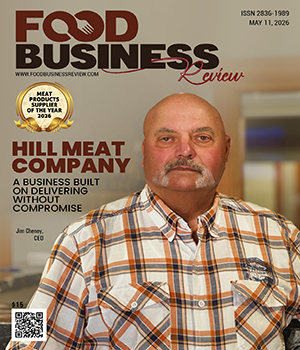
What issues arise when meat processing responsibilities are fragmented across multiple operations? Most meat processors specialize in one part of the business. Some focus on sourcing while others on production. Many leave distribution to third parties and deal with the consequences when something goes wrong. Responsibility gets split, and with it, so does accountability. That fragmentation defines much of the industry and often where consistency breaks down. At Hill Meat Company, that separation does not exist. The company has built its operations around owning the outcome end-to-end. It works closely with producers to define how animals are raised, invests heavily in how products are processed and runs its own trucks to ensure deliveries arrive as expected. Each decision is intentional and designed to remove variables that could affect consistency for the customer. “We choose to take care of our customers,” says Jim Cheney, CEO. “If something needs to be adjusted to make that happen, we do it.”
Top IQF Vegetables and Fruits Supplier 2026
What challenges do customers face when sourcing globally distributed IQF food products? For customers navigating global sourcing of individually quick frozen (IQF) products, supply continuity, competitive pricing and responsive service are critical. Just Quality International (JQI) is a trusted partner for culinary creators, offering versatile, high–quality food solutions that elevate experiences, grow brands and deliver lasting value. It supplies a range of IQF fruits and vegetables, enabled by global sourcing diversification, origin optimization and cross-trained teams. JQI’s inventory comprises everything from Asparagus to Zucchini, as well as spices, olive oil and value-added products. JQI acts as a supply chain architect rather than a traditional supplier, helping customers maintain consistent product quality and availability while remaining cost-effective. “For our customers, we are the problem solver. We are the innovators who turn concepts and ideas into reality,” says Yupeng Liu, founder and CEO. Exporters, local agents and freight forwarders often operate in silos, creating fragmented coordination. By integrating sourcing, quality assurance, logistics and regulatory oversight, it designs supply frameworks to create stable, reliable ingredient flows for customers. When customers introduce new menu items, JQI brings new innovative ideas to the market, coordinating sourcing, compliance and supplier readiness to meet production timelines. This eliminates intermediary layers, reducing risk and giving clients a single point of accountability across sourcing, packaging and delivery. For instance, when a customer planned a nationwide frozen Shishito pepper launch, JQI acted as an innovation partner, sourcing seeds from Japan and guiding farmers on cultivation, translating a product idea into a scalable supply. Engineering Consistency ac.

Meat Products Supplier of the Year 2026

For over a century, V. Formusa Co. has brought authentic Italian flavors to American tables through its Marconi brand family of food products. Combining culinary expertise with family tradition, the company continues its four-generation legacy of providing the highest quality and service to its customers. Founded by Vincent Formusa, V. Formusa Co. produces specialty Italian products, which include its signature Chicago-style Giardiniera, gourmet pepper blends, pasta sauces, salad dressings and vinegars, alongside premium imported tomatoes from Italy. Each Marconi product is designed to enhance meals for households and restaurants while delivering consistent, high-quality offerings to retailers nationwide. “What my family and I have accomplished in the past 25 years makes us proud, but 127 years of history makes it even more meaningful,” says Jeff Johnson, president and 4th generation Formusa. V. Formusa Co.is led by a closely connected, multi-generational team. Jeff works alongside his parents, Bob and Sue Johnson and his sister, Joey Schramm, who oversees operations. Together, they bring hands-on experience and a shared passion that drives the company’s growth by fostering innovation and expanding its range of specialty Italian products. Building Client Loyalty through Transparency and Expertise Bold pepper blends, Italian-style salads and other specialty recipes give customers a reason to reach for the Marconi jar beyond price. Its flagship Chicago-style Giardiniera has grown from a Chicago favorite to a nationwide staple over the past two decades. V. Formusa Co. serves major national retailers, independent grocers and family-owned delis. Marconi products are found on shelves nationwide. No matter where it’s sold, customers can expect the same consistent quality and flavor in every jar. Bringing a jar to the shelf is a complex process. Crop performance, supplier deliveries and packaging affect timing and price. V. Formusa Co. overcomes these hurdles through careful planning, proactive problem-solving and clear communication with clients about pricing and lead times. A transparent approach reassures customers that any price adjustments reflect efforts to maintain consistent quality and the value the Marconi name represents.
Top Wine Club Management Software 2026
Why do growing wine clubs struggle with operational scalability? Wine clubs rarely break because of demand. They break because of spreadsheets. As membership grows, many wineries, retailers, and wine bars still manage releases with Excel files or paper lists. Staff manually tracks who gets which bottles, who has paid, and what needs to ship. Billing takes days. Shipments go out unpaid. Simple mistakes multiply with every new member. That operational strain is exactly where The Wine Club Site focuses. Not winery management. Not point of sale. Strictly wine club releases, members, tiers, billing events, and shipments. The platform replaces manual coordination with a single system that organizes every member and every release in one place. Operators set schedules, assign wines to tiers, apply pricing or discounts, and execute billing and fulfillment in minutes rather than days. Reports show instantly who has paid and what is leaving the door, removing guesswork before a release goes out.

CXO INSIGHTS

The Digital Age of Food Safety and Quality
Jorge Hernandez, Quality Assurance VP, the Wendy’s Company [NASDAQ : WEN]
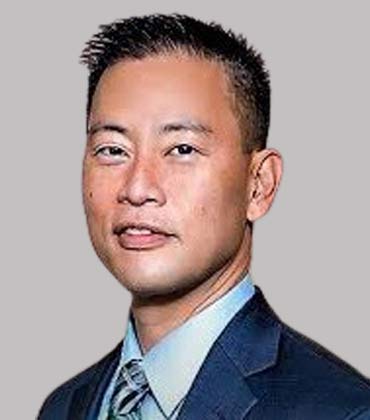
Food Security Challenges: Health-driven and Consumer Consumption of Fruits and Vegetables Still Not Affecting Agricultural Usage and Impact on Risk
Takashi Nakamura, Vice President, Fresh Del Monte[FDP: NYSE]

Plant-Based Meat Alternatives: Manufacturing Food Safety Considerations
Younes Jellal, Head of Supply Quality & Product Safety, Impossible Foods

The Art of Food Innovation lies in Building a Sustainable Future
Chad Clem, Vice President of R&D, Fsqa, Pmo & Plm, Applegate Farms
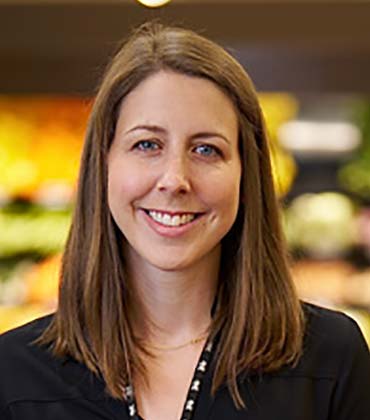
From MarTech Sprawl to Retail Signal: Building the AI-Ready Stack
Morgan Spencer, Director of Retail Marketing, Big Y Your Family Market


IN FOCUS

Revitalizing the Meat Industry: Guiding Consumer Trends with Product Suppliers
Meat products suppliers transform through technology, evolving consumer preferences, and sustainability initiatives, ensuring safe, efficient, and resilient global supply chains
EDITORIAL
Strengthening Food Systems Through Execution
Resilience in food systems is increasingly defined by how effectively companies align sourcing, production and delivery under growing operational pressure. In this edition of Food Business Review, the focus is on organizations building disciplined supply models that strengthen reliability, traceability and performance. As expectations rise around consistency, food safety and sustainability, execution across the value chain has become a defining competitive measure.
Positioned at the core of this edition, Hill Meat Company, recognized as the Meat Products Supplier of the Year 2026, has built a model centered on end-to-end accountability across sourcing, processing and distribution. By maintaining control over critical stages of production and delivery, the company reinforces consistency while reducing fragmentation often seen across supply chains. Its disciplined operating model demonstrates how responsiveness and ownership can translate into sustained customer trust and scalable growth.
Supply resilience also depends on innovation beyond traditional production models. Just Quality International, recognized as the Top IQF Vegetables and Fruits Supplier 2026, strengthens continuity through multi-origin sourcing, integrated quality oversight and coordinated cold-chain logistics that support reliability across global ingredient flows. Its approach reflects how supply architecture itself can become a strategic differentiator in increasingly complex food networks.
Leadership contributions in this issue also examine broader forces shaping the sector. Takashi Nakamura, Vice President at Fresh Del Monte Produce, emphasizes rigorous risk assessment, food safety discipline and the relationship between agricultural systems and longterm food security. Michael Weber, Senior Director Sustainability, Climate & Environment, Global Sustainability at Mondelēz International, highlights systems thinking, regenerative agriculture and cross-industry collaboration as central to embedding sustainability into supply chain performance.
Viewed together, these contributions point to a food sector increasingly shaped by disciplined execution and integrated thinking. In that environment, operational control, supply chain discipline and systems-level collaboration are becoming essential to long-term resilience. We invite readers to explore these approaches and apply relevant insights within their own organizations.
