
Thank you for Subscribing to Food Business Review Weekly Brief


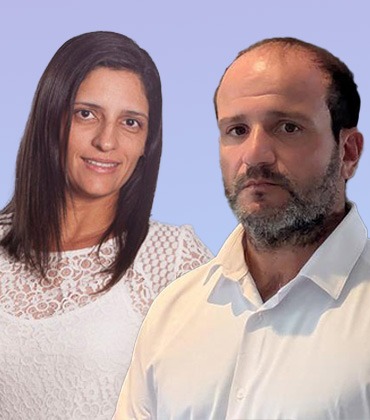 Lívia Castro, Founder and Marcelo Monteiro, Founder
Restaurant marketing rarely breaks at the idea level. It breaks during execution. Campaigns are built around service hours, staffing constraints, and fluctuating demand. Messaging has to adapt quickly to what is happening on the floor, not just what performs well online. In that environment, marketing only works when it is structured around how restaurants actually operate.
That execution-first reality defines Contágio Comunicação, a branding and performance agency. It helps restaurants grow sustainably in an algorithm-driven market by structuring executable marketing systems around real operational constraints. Over time, this restores control over brand expression, customer data, and margins.
Founded in 2003 by Marcelo Monteiro and Lívia Castro, Contágio has grown over more than two decades by working exclusively with restaurant brands across Brazil and the U.S.
“We believe visibility alone doesn’t build businesses,” says Marcelo Monteiro, founder. “When branding, media, and CRM are structured as one system, restaurants stop reacting to platforms and start making decisions they can sustain.”
The Fundamentals of Sustainable Growth
For restaurants, presence across the full customer journey is non-negotiable, from search and social discovery to reviews, in-store experience, and direct communication. Contágio’s approach prioritizes participation over exposure. This includes active reputation management, the development of owned audiences through email and messaging platforms, and the deliberate reduction of over-reliance on third-party channels that introduce volatility and margin pressure.
This operating discipline is formalized through a proprietary framework known internally as the Fundamentals. Applied consistently across every client engagement, each cycle consolidates data from all relevant touchpoints to extract insights, identify constraints, and define the next execution sprint. Creativity remains central to the process, but it is treated as an output shaped by context, not a starting point. Performance is evaluated through commercial signals: demand, visit frequency, retention, and revenue, rather than surface-level engagement metrics.
-
We believe visibility alone doesn’t build businesses. When branding, media, and CRM are structured as one system, restaurants stop reacting to platforms and start making decisions they can sustain.
The methodology is shaped by more than two decades of restaurant-specific experience, spanning both the pre-digital era, where positioning, design, and storytelling define brand value, and today’s algorithm-driven landscape. It is further informed by firsthand entrepreneurial experience, building and operating food and technology ventures, including early nutrition and delivery platforms.
More recently, Contágio has incorporated AI-driven tools to support data interpretation, prioritization, and decision-making. These tools are used to increase efficiency and clarity without adding operational complexity for restaurant teams.
From Digital to Physical, Building Cohesive Brand Systems
Contágio’s perspective extends beyond digital channels.
“We treat the physical environment as a critical part of the marketing system, ensuring that menus, packaging, in-store communication, and visual identity reinforce the same brand promise expressed online,” says Lívia Castro, founder.
Menu engineering, design hierarchy, and intentional in-store messaging are used to guide decision-making, elevate perceived value, and increase average ticket size, without relying on discounts or price-driven tactics. Every intervention is evaluated through a simple lens: does it strengthen the brand across touchpoints, or fragment it?
This integrated approach has delivered measurable impact for multi-unit and international restaurant brands operating in competitive markets across Brazil and the U.S. In these engagements, Contágio has functioned less as an external supplier and more as a strategic partner.
In practice, this has included structuring group booking journeys, aligning digital campaigns with in-venue communication, and connecting physical experiences directly to CRM systems to support retention and scalability. Over time, trust deepened, data was shared more openly, and marketing decisions shifted from reactive tactics to long-term growth planning.
Over sustained engagements, this execution discipline changes how clients work with marketing altogether. As confidence builds, restaurant operators begin sharing not only performance data, but operational constraints, commercial targets, and long-term plans. Decisions become less reactive, data is discussed more openly, and marketing shifts from constant adjustment to structured growth planning.
Ultimately, Contágio offers restaurant operators a disciplined alternative to fragmented, platform-dependent growth. By aligning brand strategy, performance marketing, and operational reality into a single execution system, the agency helps restaurants make better decisions, protect margins, and maintain consistency as conditions change.
Strategic Restaurant Marketing in a Fragmented Digital Landscape
Restaurant brands operate under constant pressure to stay visible, relevant and profitable in markets shaped by changing consumer habits and compressed marketing budgets. Digital channels promise reach and immediacy, yet many operators find that fragmented tactics produce inconsistent results. Heavy investment in social media alone rarely translates into sustained foot traffic, while performance advertising without a clear brand framework often drives short-term spikes without long-term equity. For executives responsible for growth, the question is not which channel to prioritize but how to align creativity, performance and cultural relevance into a coherent marketing system.
Effective restaurant marketing today demands a balance between brand discipline and data-informed execution. Visual identity, storytelling and positioning still shape customer perception, even in environments dominated by mobile screens and short-form content. At the same time, campaigns must be calibrated to budget realities and local context. Restaurants compete against national chains and delivery platforms with vastly larger spend, which means agencies must decide where focus truly changes outcomes rather than spreading effort thinly across every available channel.
Agencies that bring perspective from both pre-digital branding and contemporary performance marketing tend to approach this challenge differently. Experience rooted in design and concept development helps prevent digital work from becoming interchangeable, while familiarity with modern media buying and platform behavior supports measurable growth. This combination is especially valuable in food service, where atmosphere, menu identity and cultural cues matter as much as promotional reach.
Contagio Comunicação reflects this blended approach. Founded in 2002, it emerged during a period when brand development, design quality and narrative clarity were central to marketing success. That foundation continues to inform its work even as the firm operates fully within current digital ecosystems. Its focus on restaurants allows it to apply these principles in a sector where differentiation often depends on how clearly a concept is expressed rather than how loudly it is promoted.
The agency’s experience extends beyond traditional client work into building and scaling food-related startups, including participation in international accelerator programs. This exposure shapes a pragmatic understanding of growth constraints, experimentation and market entry, particularly for restaurant brands expanding across multiple regions. Its client portfolio spans established restaurant groups and specialty concepts in Brazil and the U.S., creating a working familiarity with cross-border branding and consumer expectations.
A defining element of Contagio Comunicação’s method is its emphasis on establishing marketing foundations before scaling campaigns. Brand positioning, visual coherence and message consistency are treated as prerequisites rather than afterthoughts. Performance initiatives such as paid media and social campaigns are introduced once this base is in place, allowing spend to reinforce a clear identity instead of compensating for its absence. This sequencing reflects an understanding that isolated tactics rarely succeed without an underlying structure.
Budget sensitivity also shapes its engagement model. Restaurants often operate with limited margins and cannot afford agency relationships that prioritize large-brand priorities. Contagio Comunicação positions its work to focus effort where impact is most likely, avoiding competition with multinational clients inside agency workflows. Its ability to bridge Brazilian and North American markets further supports restaurant owners navigating cultural translation without escalating costs.
For executives evaluating restaurant marketing partners, Contagio Comunicação stands out as a disciplined choice grounded in long-term brand thinking and selective performance execution. Its history across analog and digital eras, combined with focused experience in food service, supports marketing programs that aim for sustained relevance rather than fleeting attention. In a sector where clarity, restraint and cultural understanding matter as much as reach, it represents a credible benchmark for strategic partnership.
...Read more
Restaurant Marketing Agency Info
Q1
Why is Contágio Comunicação considered among top restaurant marketing agency companies?
Contágio Comunicação is considered among top restaurant marketing agency companies because it has specialized exclusively in restaurants, bars, delivery businesses and food service brands for more than 20 years. The agency was recognized as “Top Restaurant Marketing Agency in Latin America 2026” by Food Business Review, reflecting its long term focus on hospitality marketing and restaurant growth strategies.
Q2
How does Contágio Comunicação differentiate its approach as a restaurant marketing agency?
A food service exclusive marketing model defines its approach. Contágio Comunicação develops branding, social media management, SEO, delivery marketing and in store communication strategies specifically for restaurants and hospitality businesses rather than general retail sectors. Its restaurant marketing agency model focuses on customer acquisition, brand positioning and long term audience building through tailored gastronomic marketing strategies.
Q3
How does the company support restaurants with digital marketing and branding?
Integrated marketing execution shapes its support model. Contágio Comunicação provides restaurant focused services including website development, campaign planning, Google Business Profile management, CRM strategies and social media management. Its restaurant marketing agency capabilities also extend to packaging design, menu development and visual communication materials designed to strengthen both digital and in store customer experiences.
Q4
What value does Contágio Comunicação’s restaurant marketing agency model deliver?
Brand growth and customer engagement define the value delivered. Contágio Comunicação helps restaurants improve visibility, strengthen online positioning and build recurring customer relationships through structured marketing strategies. Its restaurant marketing agency approach emphasizes measurable business growth rather than vanity metrics, helping restaurants improve reservations, delivery performance and customer retention.
Q5
What role do content strategy and digital channels play in its services?
Digital audience development is central to its operations. Contágio Comunicação focuses on SEO, organic traffic generation, CRM communication and social media engagement to help restaurants build independent customer channels beyond paid advertising platforms. Its restaurant marketing agency services also include campaign calendars and restaurant focused digital content strategies designed to maintain year round audience interaction.
Q6
Why is Contágio Comunicação relevant in today’s restaurant industry?
Restaurants increasingly require specialized marketing partners that understand hospitality operations, delivery ecosystems and customer behavior within food service environments. Contágio Comunicação addresses this demand through a restaurant marketing agency structure built specifically for restaurants, bars and hospitality brands. Its combination of branding, digital marketing and restaurant focused communication strategies positions the agency within a growing market focused on customer experience and restaurant brand differentiation.
Company :
Contágio Comunicação
Management Lívia Castro, Founder and Marcelo Monteiro, Founder
Description
Contágio Comunicação helps restaurants stand out in a crowded, platform-driven landscape by turning brand clarity into real demand. Working across digital, physical, and direct channels, the company builds cohesive marketing systems that strengthen customer relationships, reduce platform dependency, and support long-term, profitable growth for food service brands operating across markets.