
Thank you for Subscribing to Food Business Review Weekly Brief

![AGI [TSE:AFN]](/company_logos/16-bdfx.jpg "AGI [TSE:AFN]")
Food Storage and Handling Solutions Info
Q1
What Should Buyers Look for in Food Storage and Handling Solutions in Canada?
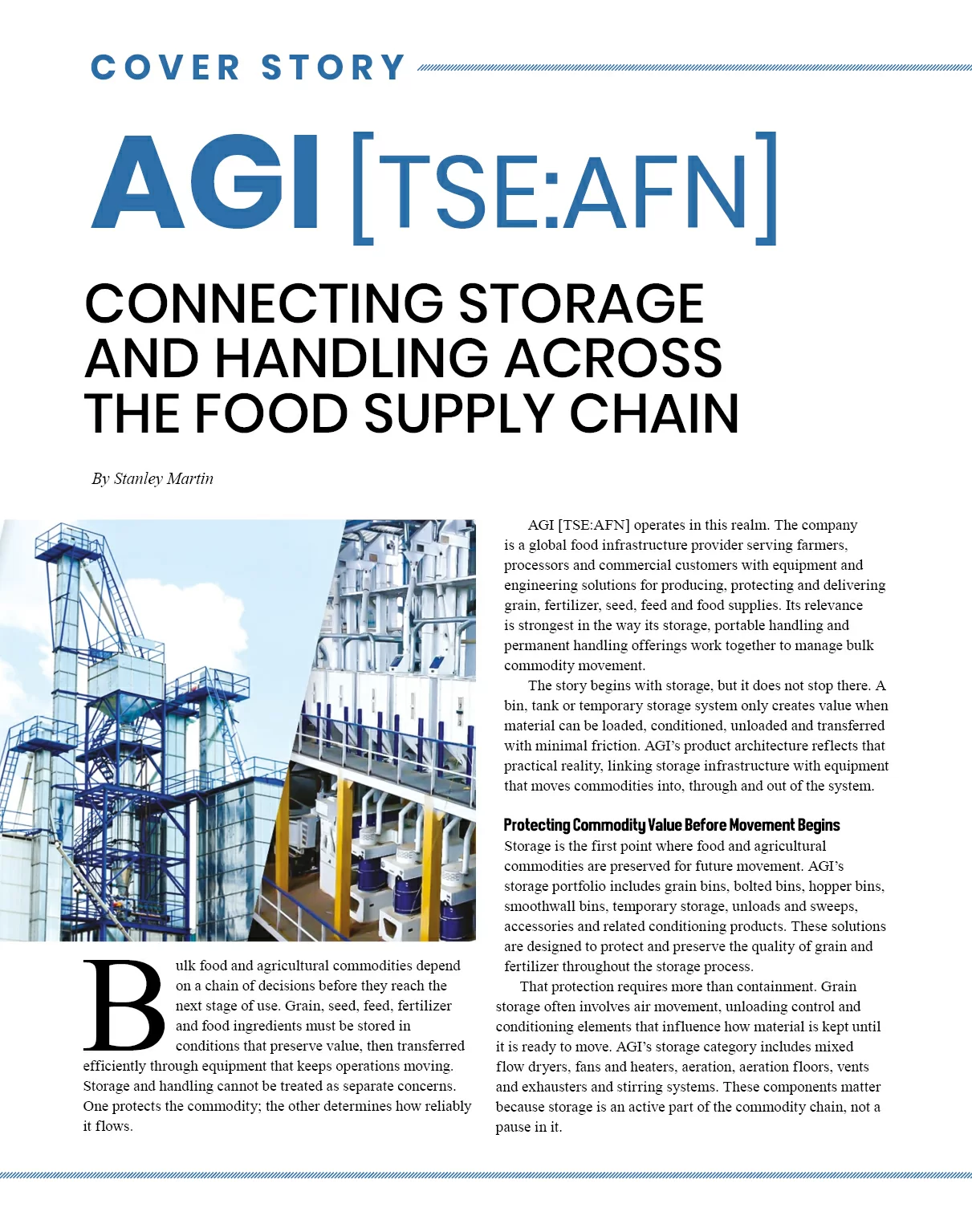
Most storage problems do not start with the bin itself. They start when material needs to move and the rest of the system cannot keep up. Buyers looking at Food Storage and Handling Solutions in Canada usually get better long-term results when storage, transfer and conditioning are planned together instead of purchased as separate pieces. AGI [TSE:AFN] approaches the process as one connected flow, combining storage, portable handling and fixed handling equipment so bulk commodities can move without creating bottlenecks between stages.
Q2
How Does AGI [TSE:AFN] Connect Storage, Transfer and Fixed Handling?
A grain bin is only useful if material can move efficiently once it is inside. AGI [TSE:AFN] connects storage through grain bins, hopper bins and temporary storage systems, then links them with unloads, sweeps, augers, portable conveyors, grain vacs, bucket elevators and belt or chain conveyors. In Food Storage and Handling Solutions in Canada, the weak spot is often the transfer point between systems. One slow transition can hold up an entire operation during busy periods.
Q3
Which Equipment Categories Matter Most for Bulk Food Flow?
Most bulk handling setups rely on three things working together: storage equipment that protects the product, mobile systems that handle changing transfer points and fixed routes built for repeated high-volume movement. Dryers, aeration systems, fans, conveyors, elevators and distributors all handle different parts of the same process. A good setup is not just about storing product safely. It is about keeping material moving predictably from receiving to processing, cleanout or loadout without constant interruptions.
Q4
Why Do Conditioning and Monitoring Matter Before Commodities Move?
A lot can go wrong before product even reaches a conveyor. Moisture buildup, poor airflow and uneven temperature can affect quality while material is still sitting in storage. Food Storage and Handling Solutions in Canada often rely on dryers, aeration floors, fans, heaters and stirring systems to keep stored commodities stable before movement begins. AGI [TSE:AFN] also includes monitoring and automation tools that help operators catch issues earlier instead of discovering problems once trucks are already waiting at loadout.
Q5
How Should Commercial Food Facilities Evaluate Project Support?
Buying equipment is usually the easier part of the project. The harder part is coordinating engineering, installation, access and ongoing support once operations begin. Food Storage and Handling Solutions in Canada become more manageable when consulting, millwrighting, equipment supply and after-sales support work under the same project structure. AGI Food supports food and beverage manufacturing projects through both partial and turnkey delivery models, allowing facilities to build around their actual product flow instead of forcing operations around disconnected equipment purchases.
Q6
What Makes Canadian Food Storage and Handling Different?
Canadian operations often deal with large commodity volumes, seasonal pressure and facilities spread across different layouts and climates. Food Storage and Handling Solutions in Canada need to account for storage time, transfer distance, maintenance access and the route between receiving and loadout. AGI [TSE:AFN], with roots in Canadian agriculture and food infrastructure, works across grain, seed, feed, fertilizer and food handling environments where short operating windows make coordination between storage and movement especially important.
Company :
AGI [TSE:AFN]
Management Paul Brisebois, President and Chief Executive Officer
Description
AGI provides food storage and handling infrastructure for grain, seed, feed, fertilizer and food commodities, combining storage systems, portable transfer equipment and permanent handling solutions to help Canadian and global operators protect, move and manage bulk materials across supply chains.