

Thank you for Subscribing to Food Business Review Weekly Brief
The product from palm oil that is most widely produced and consumed by society in general is palm oil. Palm oil is a derivative of the palm oil factory processing process, which produces crude palm oil (CPO). Palm oil is deeply embedded in the daily lives of people throughout the world with various uses such as for food as cooking oil, jam, and margarine, and for cosmetics such as shampoo, lipstick, soap and others. All of these products are products that almost all people in the world use. When discussing palm oil products, we must fully understand that the products used are environmentally friendly and sustainable. The basic things in ensuring environmentally friendly and sustainable products are: First, companies producing palm oil products have complete permits from upstream to downstream. Second, producers must ensure that their products do not come from protected forest areas and are stolen. Third, palm oil product producers strive to increase customer confidence in product quality through sustainable certification schemes with international standards such as the Roundtable Sustainable Palm Oil (RSPO) or national standards such as Indonesian Sustainable Palm Oil (ISPO). Fourth, this company must really pay attention to the welfare of workers in the company and the social welfare of the community around the company's location to avoid conflicts over the company's presence in the surrounding community. Lastly, comprehensive environmental management with good and complete management of liquid waste and hazardous waste produced, avoiding water and air pollution and maintaining conservation areas and biodiversity. In Indonesia, one of the standards that is currently mandatory or mandatory for palm oil companies to comply with is the ISPO certification scheme. Indonesian Sustainable Palm Oil has seven principles to adhere to, including compliance with legislation, Implementation of good plantation practices, management of the environment, natural resources and

Food Services Management
At a leading international school in Kuala Lumpur, fewer than half of the students were choosing the cafeteria. Long queues, limited variety, and a lack of engagement had gradually reduced meal uptake below 50 percent. Within two school terms of SHF Services taking over operations, that number exceeded 80 percent. The transformation was not just about better food. It was about rethinking how food service is delivered—from the kitchen outward. From Low Uptake to High Engagement A key part of this transformation was the complete redesign of the cafeteria experience. SHF Services restructured the layout into a multi-station concept, offering more than 30 daily meal options across different cuisines and dietary preferences. Menus were enhanced with clear allergen labeling and designed in collaboration with a corporate dietitian, ensuring both transparency and nutritional balance. “When students have choice, clarity, and confidence in what they eat, participation naturally follows.” For students, this meant more variety and autonomy. For schools, it translated into higher satisfaction and significantly improved uptake. Where Food Service Begins: Inside the Kitchen How does on-site food preparation improve responsiveness and quality across large catering operations today? Unlike traditional catering models that rely on centralized production, SHF Services operates directly within its clients’ environments. Kitchens, teams, and systems are fully embedded on-site, enabling immediate responsiveness and complete control over every step of the process. Across schools, corporate campuses, aviation facilities, and remote industrial sites in Malaysia, SHF prepares over 25,000 meals daily, freshly made from scratch..

Beverages Manufacturing
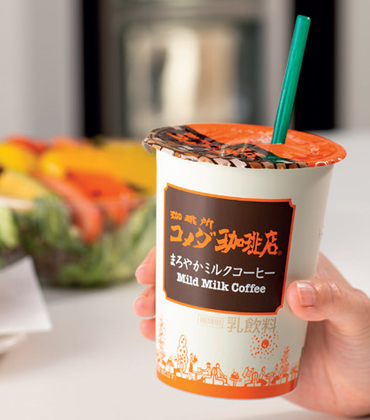
Delicious, fun and delightful—these words perfectly capture the spirit that defines Japan’s beverage culture. New varieties appear on convenience store shelves at the speed of fast fashion. From the warm aroma of cocoa to the retro sweetness of milk beverages, every beverage is accompanied by eye-catching packaging. In Japan’s dynamic beverage culture,Toyo Beverage stands out as a name synonymous with precision, creativity and consistency. One of the industry’s youngest beverage developers and manufacturers, it has grown into a full-service provider offering end-to-end production, from formulation and sourcing to bottling, packaging and logistics. With a focus on craftsmanship and innovation, it blends Japan’s respect for quality with a forward-thinking approach to technology and market trends. “We strive to develop attractive products while ensuring the highest standards of safety and quality for our customers,” says Satoshi Kumagai, president and CEO. At Toyo Beverage, every idea moves quickly from discussion to design to shelf, blending traditional flavors with modern sensibilities and creating moments that surprise yet feel unmistakably right. Commitment to safety and stability has made it a trusted manufacturing partner for leading private-label clients and OEM brands. Its team engages with clients in person to strengthen relationships built on transparency and shared purpose. Every partnership is founded on the principle that long-term trust is built on delivering quality products without exception. From procurement and product development to scheduling and quality assurance, each department operates in close coordination to maintain a consistent supply of safe and high-quality beverages. The integrated workflow enables precise control of every production stage, guaranteeing that products reflect Toyo Beverage’s uncompromising standards.
Foodservice Equipment
For more than a century, FPT has been redefining the science and artistry of food production. Its origins trace back to 1900, when a family-run slaughterhouse in Germany laid the foundation for a legacy built on craftsmanship, precision, and integrity. Over four generations, that small enterprise evolved into a global symbol of quality and innovation, guided by values that place excellence and responsibility at the core of every operation. In 2004, building upon its European heritage, the founder established FPT in Bangkok with a mission to transform Asia’s food processing industry. What began as an ambitious regional venture has grown into one of the world’s most comprehensive providers of integrated, farm-to-fork solutions. With operations spanning nineteen countries, FPT offers a complete ecosystem that combines plant design, proprietary machinery, automation software, operator training, and continuous after-sales support. Every element of its model is engineered to deliver efficiency, safety, and sustainability. “Our strength lies in delivering intelligence from the shop floor to the top floor,” says Axel Arras, Chairman of the firm. “We don’t just provide equipment; we engineer productivity, safety, and traceability into every process.” His statement reflects the company’s holistic approach, where digital precision by AI meets mechanical reliability. Through robotics, smart sensors, and advanced analytics, FPT designs production lines that are faster, cleaner, and more adaptive to changing consumer and environmental demands. Setting the Gold Standard for Traceability and Trust One of its most transformative breakthroughs is the RFIDenabled iBox, a patented traceability crate designed towithstand extreme conditions while capturing over a hundred data points from origin to output. This innovation eliminates the need for paper labeling, enhances transparency, and minimizes contamination risks. The iBox has become a benchmark for digital traceability, integrating seamlessly into automated warehouses and enabling manufacturers to maintain real-time oversight from field to factory floor. In 2025, FPT’s leadership in innovation and responsible production was recognized globally when it received the Best Food Provider Award and the Special Sustainability Award. Additionally, FPT was honored with the prestigious ASEAN SME100 award. These honors highlight the company’s ability to merge technology with purpose. Its advancements in natural preservation, hygienic packaging, and microwaveassisted pasteurization have redefined how food is processed and preserved, allowing products to retain flavor and nutrition for longer periods while reducing waste and improving safety for consumers worldwide. Sustainability Fuels a Culture of Relentless Innovation Environmental responsibility has always been an intrinsic part of FPT’s business model. The company’s zero-waste philosophy ensures that no resource goes unused. Co-products such as bone broth, feather meal, and fish meal are repurposed into valuable raw materials. Its proprietary pyrolysis technology converts organic waste into fertilizer and recycles steam to reduce energy consumption. Complementing these innovations is the PowerHeater system, which achieves one of the lowest carbon footprints in the food processing industry. Through advanced air treatment and heat recovery systems, FPT continually lowers its environmental impact, proving that sustainability and profitability can coexist within a single operational framework.
Alternative Proteins/Plant based food
The Incredible Flavor Odyssey
Mustafa Shamseldin, Senior Vice President - Category Growth Acceleration, Global Foods and Beverages, Pepsico
Supplement

Embracing the East: How Asian Flavors Revolutionized Italian and European Cuisine
Patrick Vigini, Multi-Outlet F&B Manager (Assistant F&B Manager), Hotel Mulia Senayan
Alternative Proteins/Plant based food

Scaling Seafood with Precision and Purpose
Francesco Taranto, General Manager, Catalano's Seafood
Supply Chain

Food Safety Culture in Multicultural Workplaces
Karem Tirado, Regional Food Safety and Quality Manager, the Chefs' Warehouse
Food Products

Turning Culture into Conversion: How Modern F&B Marketing Wins in a Scroll-First World
Raul Martinez, Director of Marketing & Business Development, the Taco Spot

IN MY OPINION
Supplement
Trends and Strategies in the Era of Constant Innovation
Samson Lam, Executive Director of Food & Beverage, Sands China. [SEHK: 1928]

LAST WORD
Food Brokers
Revolutionise Your Formulations with Cost-Effective Whey Permeate
Noel Navin, Director of International Sales, Agropur US
IN FOCUS

Smart Catering Services Reshape the APAC Event Landscape
Food catering services offer varied and customizable menu options, streamline event preparation, and enhance the overall dining experience for guests.
Self-Order Kiosks: Enhancing Retail and Food Service Operations in APAC
Self-order kiosks enhance customer experience and operational efficiency by offering autonomy, personalization, reduced labor costs, and improved order accuracy
EDITORIAL
Advancing the Future of Dining and Food Operations
The food service industry across APAC is being reshaped by a growing focus on operational discipline, nutrition and guest experience. This edition of Food Business Review APAC explores how catering providers, hospitality leaders and restaurant operators are responding to changing consumer expectations while maintaining consistency, efficiency and scale.
SHF Services, recognized as the Top Food Catering Services in APAC 2026, has built its reputation through a hands-on approach to institutional catering. Rather than preparing meals from a distant central kitchen, the company operates directly inside schools, corporate campuses, aviation facilities and industrial sites, where teams prepare more than 25,000 fresh meals every day. SHF’s entire system is organized around hygiene monitoring, food quality tracking, nutritional maintenance and consistent performance across every branch, allowing the company to grow beyond traditional food services and become a long-term operational partner for organizations.
Leadership perspectives on this issue further support these shifts. Samson Lam, Executive Director of Food & Beverage at Sands China discusses the importance of healthy dining, sustainability efforts, digital integration and more personalized guest experiences. He explains how these factors are reshaping modern restaurant strategies, especially in highly competitive hospitality environments. Meanwhile, Patrick Vigini, Multi- Outlet F&B Manager (Assistant F&B Manager) at Hotel Mulia Senayan, discusses how Asian flavors are increasingly influencing Italian and European cuisine, as cultural exchange and culinary fusion continue to influence dining experiences around the world.
Together, the companies and leaders featured in this edition reflect an industry that is becoming more operationally precise, consumer-aware and globally connected. As the sector continues to evolve, the ability to align operational performance with changing customer expectations will remain a defining factor in long-term growth.
We invite our readers to explore the perspectives in this edition and examine how these evolving strategies are influencing the future of food service across APAC.
